


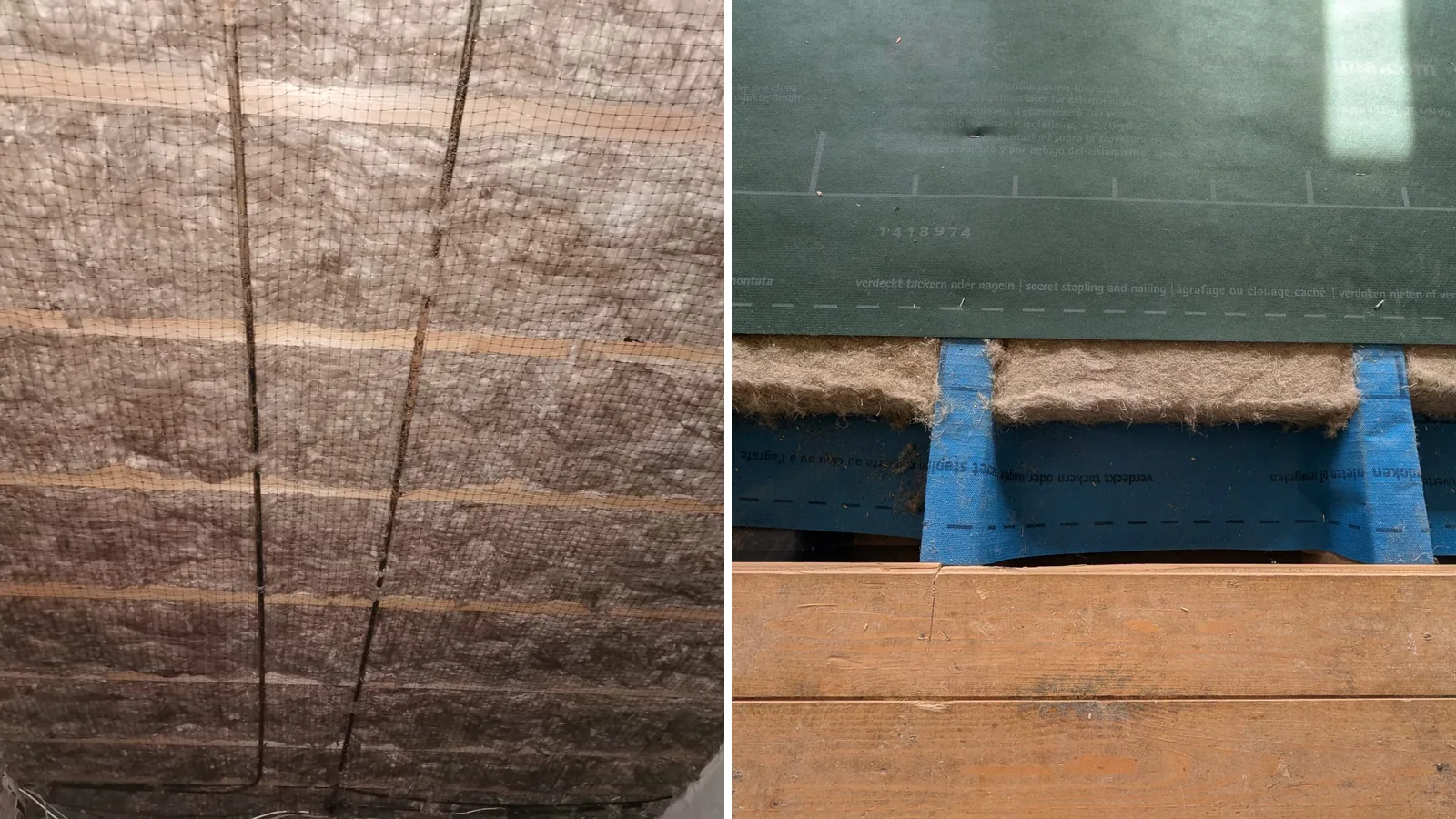
Yes, underfloor insulation works, on one type of floor. If your ground floor is suspended timber over a ventilated void, insulating it is one of the most reliable upgrades you can make to a Scottish home, and the change is one you feel underfoot. If your ground floor is a solid concrete slab, insulating it on its own rarely pays. What sits under your floorboards decides which answer is yours.
- Underfloor insulation works on a suspended timber floor over a ventilated void, the standard Scottish ground floor until roughly the 1940s.
- On a solid concrete ground floor it rarely stacks up, because insulating a slab means digging it out or building up and losing head height.
- The first change you notice is comfort, as the floor stops feeling cold underfoot and the draught along the skirtings stops.
- A standard installation costs £1,400 to £2,500, and an eligible home can get a Home Energy Scotland grant of up to 75%, capped at £1,500 for underfloor.
- The work is usually done in a day, with insulation fitted between the joists and held up on support netting.
- Insulation that sags, leaves gaps at the edges or blocks the air bricks stops working, so the installation detail decides the result.
You may have heard otherwise from a neighbour, or from a bloke at work who had it done and swears he felt nothing. Sometimes he is right. The floor type, the quality of the install and the state of the rest of the house all decide whether the job pays off, and a survey can check each of them before you spend anything.
Does underfloor insulation work? It depends on the floor you have
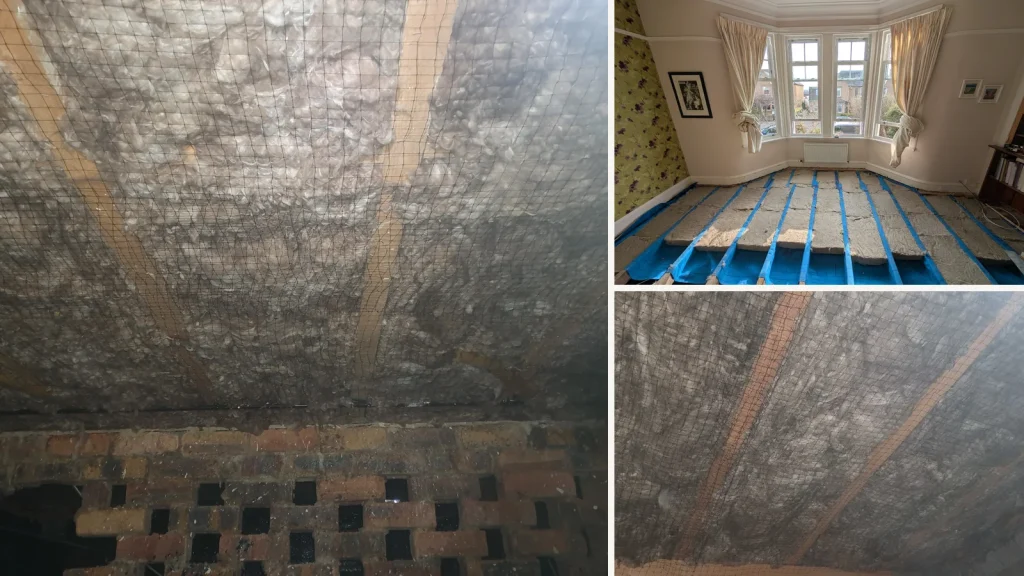
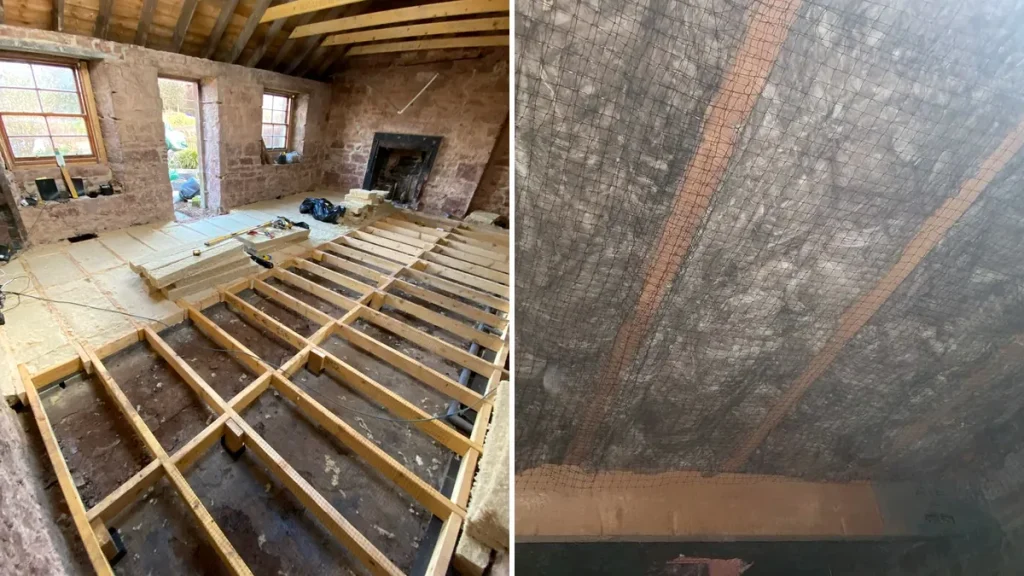
A suspended timber floor from above and below: hemp fitted between the joists of a bay-windowed front room, and mineral wool netted under the joists above a brick sleeper wall built with gaps for air.
Age gets you most of the way to an answer before anyone lifts a board. Suspended timber over a ventilated void was the standard Scottish ground floor until roughly the 1940s, which covers tenement flats, Victorian and Edwardian terraces and pre-war villas. From the 1950s the concrete slab took over, and by the 1970s it was close to universal. Floors laid from the 1990s onwards sometimes came with insulation already in them, which is worth knowing before you pay anybody to add a second layer.
Then check your paperwork. If you bought the house after December 2008, the survey section of your Home Report describes how the floors are built. Drawings done for an extension or a loft conversion will say the same.
Extensions are where the age rule slips. A 1900s terrace with a kitchen built on the back in 1985 has timber under the front rooms and concrete under the rear, so your house can be both. That is why a survey looks at the whole ground floor, not just the room you happen to be standing in. If you want to check yours first, our guide to telling a suspended timber floor from a solid one walks through the signs.
The slab sits on the ground, which holds a far steadier temperature than outdoor air, so less heat escapes to begin with. There is no void to work in, so insulating it means digging the floor out or building up on top.
Outdoor air runs under the boards all winter. Insulation fits between the joists, from the void or with the boards lifted, and the floor stops losing heat to that cold air.
A suspended timber floor is joists with floorboards on top and open air underneath, vented to the outside on purpose so the timber stays dry. That design has kept Scottish floors sound for a century. It also leaves the underside of your floor at outdoor temperature all winter, with about 20mm of softwood board between the void and your feet.
Insulation between the joists changes two things. It stops heat leaking down into the cold void, and, with the edges packed properly, it closes the path cold air uses to get into the room. The second is the one you notice. For the method rather than the verdict, there is a full walkthrough of how a suspended timber floor is insulated.
Building insulation up on top of a slab costs you 100mm or more of ceiling height, with doors rehung and skirtings redone to match, so the bill and the upheaval both multiply. A slab is worth insulating when the floor is coming up anyway, and above all if underfloor heating is going in. Then foil-faced PIR board (a rigid foam board) is the right specification, at £2,500 to £4,500.
Does floor insulation make a difference you can feel?
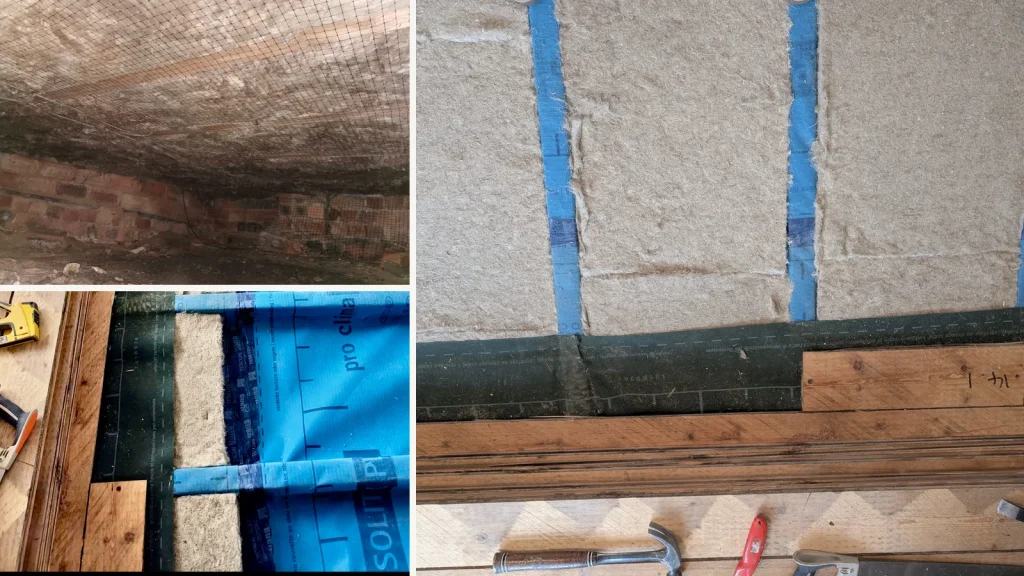
Mineral wool netted under a floor, and hemp fitted from above between taped joists with a membrane laid over it.
Yes, and the comfort changes before the bill does. You can walk into the front room in socks without flinching. The draught that ran along the bottom of the sofa and the skirting behind the telly stops. Rooms come up to temperature quicker and hold it longer once the heating goes off, which is the same effect seen from the other end.
So treat this as a comfort job that saves energy too. A cold floor makes a room feel colder than the thermostat says, because your feet touch it and the cold air pools at ankle height. Carpet and underlay hide some of that, so people with thick carpets often assume they have no problem while the heat keeps leaving underneath.
There is one limit. Your floor is one cold surface among several. If the loft is thin, the windows are single glazed and the walls are solid stone, insulating the floor will not make the house warm on its own, and anyone who tells you otherwise is selling. What it removes is one of the largest cold surfaces left on a typical Scottish ground floor. In a house where the loft is already done, the floor is often the biggest job left.
If the loft is already done and the floor is still cold underfoot, a free survey will tell you whether that floor is the biggest job you have left.
Book Your Free Survey →“It was a stress-free experience for me and I felt the reduction in draughts the moment the underfloor insulation was installed. The wind is blowing a hooly outside today but no draughts in my house now!”
Susannah Silver
Underfloor and loft insulation · Google review
When underfloor insulation is not worth it

A hatch cut through a finished floor to reach the void, with mineral wool fitted beneath it.
We turn work down at surveys, and these are the cases where we say so.
- A solid concrete ground floor, unless it is coming up anyway. If someone quotes to insulate a slab without mentioning digging out or lost head height, ask exactly what they plan to fix the insulation to.
- A flat with another heated home directly below. Your floor is your neighbour’s ceiling, both sides sit at living temperature, and there is almost nothing to save. A ground-floor flat over a void or a cellar is a different story and often worth doing.
- A floor that already has decent insulation. Some houses built from the 1990s on came with it. We check before we quote, so you are not sold a second layer.
- A floor you are about to replace. If new boards or a new kitchen floor are planned for next year, wait and do both together, so you pay for the access once.
- A room you barely heat. Insulating under an unheated back room or an unused dining room returns very little. A part job on the rooms you live in is the better spend.
- An expensive finish in the way. Original parquet, solid oak or new tiles with no crawl space underneath change the sums. The job can still be worth doing, and you should hear the real cost of getting in and putting the floor back before you commit.
Underfloor insulation savings: what the numbers honestly say
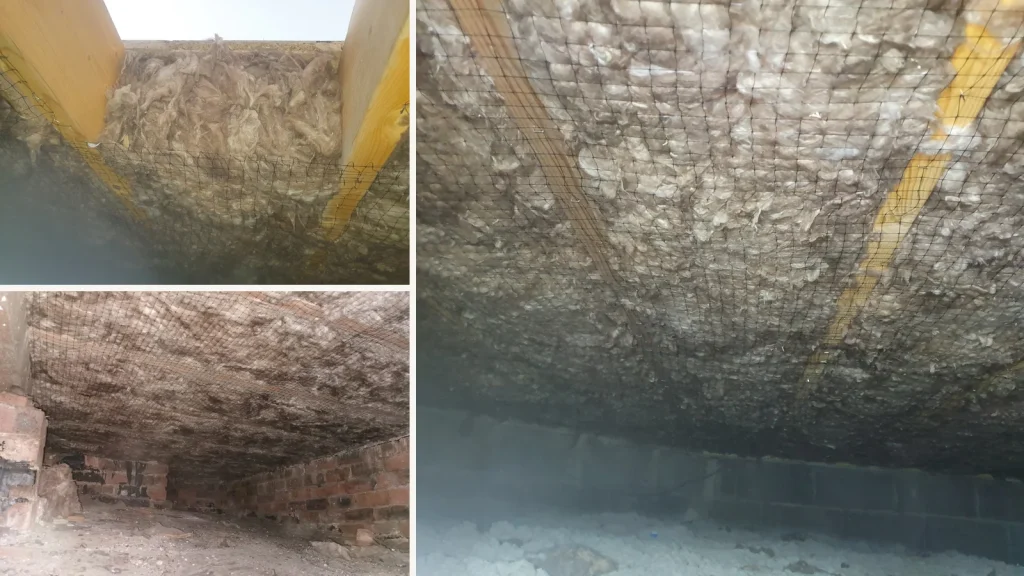
Mineral wool between the joists, held up on support netting, seen from above and from inside two crawl spaces.
We will not print a single annual saving figure, because any company that does is guessing on your behalf. Your savings depend on floor area, how exposed the void is, whether the rest of the house is insulated, how warm you keep it and how many hours the heating runs. A draughty end terrace kept at 21 degrees and a sheltered mid terrace kept at 18 will get different results from the same install.
We can stand behind the cost. A standard underfloor installation costs £1,400 to £2,500, depending on floor area and access, and the work is usually done in a day.
of the cost a Home Energy Scotland grant can cover, if your home is eligible
grant cap for underfloor insulation
Home Energy Scotland grant rules, checked 19 August 2026. A TrustMark-registered installer is required.
For an eligible home, a job inside that price band leaves £350 to £1,000 to pay once the 75% rate and the £1,500 cap are applied. That changes the payback question: you set the savings against a few hundred pounds, and the floor is warmer from the week it goes in.
Underfloor insulation also counts in an EPC assessment, which matters if you are selling, remortgaging or letting. It is rarely the one measure that moves a band, and it adds to what the loft already scores.
Get the grant maths for your own floor in writing before you decide whether the numbers work.
Book Your Free Survey →“Calum was very knowledgeable about loans and grants available and how to access them, and provided an excellent surveyor for the job. Time keeping was excellent and they were careful to keep the area around where they were working clean.”
Sue A-B
Google review
Why some underfloor insulation jobs do not work
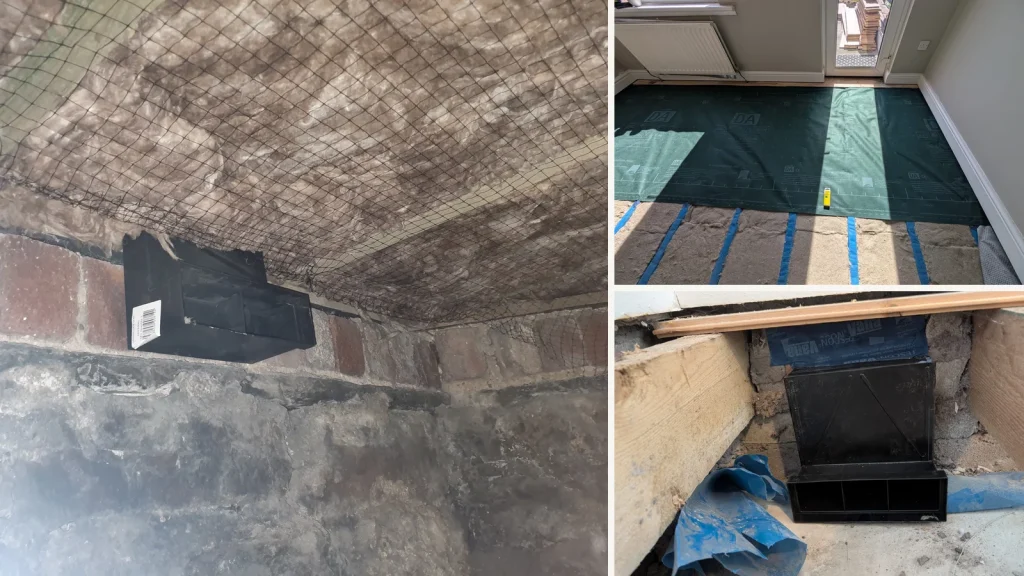
Vent extenders keeping the air bricks working under netted mineral wool, and a membrane laid across a floor insulated from above.
The “made no difference” stories are often true, and the cause sits in how the job was fitted. These are the faults behind them.
Nothing holding the insulation up. Batts wedged between joists hold for a winter or two, then footfall and seasonal timber movement let them drop. A slumped batt leaves a cold air gap right under the boards, where the insulation was meant to be. Skipping the netting is one of the commonest corners cut, and you would only spot it by crawling under with a torch.
Holds for a winter or two, then slumps and leaves a cold gap under the boards.
Netting stapled across the joists keeps the insulation tight to the boards as the timber moves, for a small part of the material cost.
Our post on underfloor insulation netting and membranes explains when a membrane goes in alongside the netting.
Gaps. Joist spacing in an old Scottish house is rarely regular. Insulation cut short at the ends or squeezed past a pipe run leaves channels for cold air to get round it. Cutting each piece to fit tight, edge to edge, takes longer, and it decides whether a floor performs fully or only half performs.
The perimeter left till last. Cold arrives along the narrow bay beside each wall and at the joint where the boards meet the skirting, which is why people report cold ankles in a room that has just been insulated. Cutting those edge bays by hand and packing them tight is part of a proper install and sits inside our standard price. Taping the whole perimeter airtight is a separate specification, priced as an upgrade, so ask any quote which of the two it covers.
Blocked air bricks. Some cheap jobs, and most DIY attempts, seal the void to stop the cold. That kills the airflow that keeps your joists dry and swaps a comfort problem for a structural one. Our crews check and clear the vents, and fit vent extenders where a raised garden or an extension has buried them. Draught-proofing belongs at floor level, where you live, and the vents stay open.
One room done, the rest left open. Insulating a single room while the void under the hall and kitchen stays open limits what you feel, because cold air still moves under the rest of the floor. A phased job can be the right call on budget, as long as you know what to expect from it. The full specification for our standard and natural systems is on our underfloor insulation service page.
Is underfloor insulation worth it after the Home Energy Scotland grant?

An installer working on his back in a crawl space, under mineral wool held up on support netting.
For a suspended timber floor in a home you heat, the answer is usually yes, and the Home Energy Scotland grant makes the sums easy. These are the terms that apply.
- Grant: up to 75% of the cost for an eligible home, capped at £1,500 for underfloor insulation.
- Loan: an optional interest-free loan, capped at £500 for underfloor insulation.
- Installer: the work has to be carried out by a TrustMark-registered installer, which we are.
- Eligibility: the application goes to Home Energy Scotland, who assess it and decide, so funding is confirmed household by household.
Our part in that is smaller than people expect. We answer the questions the process throws up and supply the installer paperwork and photographs the scheme asks for.
Access to the void and the state of the vents vary by housing type. In post-war semis and bungalows across Lanarkshire the crawl spaces are often roomy enough to work in, and the job runs quickly, which is part of why underfloor insulation in East Kilbride is a measure we fit regularly. In older Glasgow terraces and ground-floor flats the void is often shallower and the boards come up in sections, and the survey establishes that before anyone gives you a price.
Frequently asked questions
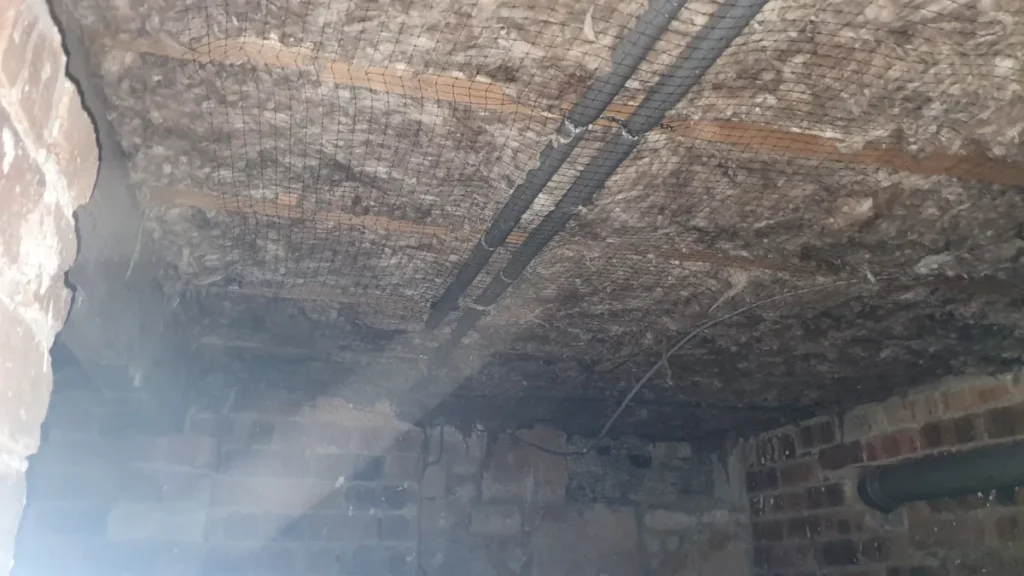
Insulation held tight to the underside of the boards, where the cold air used to sit.
Does underfloor insulation really make a difference?
On a suspended timber floor over a ventilated void, yes. The floor stops feeling cold underfoot and the draughts at the skirtings stop, often within the first week. On a solid concrete floor the difference is far smaller and rarely justifies the work involved.
Is underfloor insulation worth it?
For a heated room over a ventilated timber void, usually yes. For an eligible home, the Home Energy Scotland grant leaves £350 to £1,000 to pay on a standard job. It is not worth it over a concrete slab, over another heated flat, or where the floor already has reasonable insulation.
Does underfloor insulation work on a concrete floor?
Not in the same way. A slab has no void to work in, and insulating it means digging the floor out or building up on top and losing ceiling height. It is worth doing when the floor is coming up anyway, above all alongside underfloor heating, where foil-faced PIR board is the right specification.
How much does underfloor insulation save?
We do not put one figure on it, because floor area, the void and your heating hours all change the answer. A standard job costs £1,400 to £2,500 installed, and for an eligible home the grant leaves £350 to £1,000 of that to pay. For that you get a floor that is no longer cold underfoot, the skirting draughts gone, and rooms that warm up faster and hold the heat longer.
Will underfloor insulation stop draughts?
It should, as long as the edges and the perimeter are sealed properly. Draughts at the skirtings come from air moving up out of the ventilated void, so the work at floor level is what stops them. Where the void is exposed and windy, a wind-tight membrane over the insulation does the rest, and our netting and membranes post explains when we specify one.
How soon after the install does the floor stop feeling cold?
The draughts go first. Once the perimeter and board edges are sealed, the cold air track along the skirtings is closed before the crew packs up, and you can feel it that evening. The boards take a heating cycle or two to catch up, because they have spent the winter at the temperature of the void. After a couple of cold days with the heating on as normal, the floor sits at room temperature.
If your question is not on this list, bring it to a free survey and get the answer for your own floor.
Book Your Free Survey →“Calum did a very detailed inspection of work and quote. Couldn’t have made the whole process easier and helped so much with the HES stuff. The two crews that arrived were on time and left the place clean afterwards.”
Scott Blaikie
Google review
Find out which floor you have, then decide
Nobody should spend money on a measure that will not work in their house, and we would rather tell you that at the survey than take the job.
A free survey establishes what your floor is built from, how much of it is worth insulating, what the access means for the price and what the Home Energy Scotland grant is likely to leave you paying. You get all of it in writing.
Or call us on 0141 465 5812


