


IndiTherm is a hemp insulation made in Scotland by IndiNature. It is the natural insulation we fit most. It goes in four places in an old home: stone walls, lofts, timber floors and attic rooms. A hemp loft costs £2,000 to £3,500 before the grant. A standard glass wool loft costs about half that. So hemp is a choice you make on purpose.
- IndiTherm, made in Scotland by IndiNature, is the bulk of the natural insulation we fit.
- On a sandstone wall we fit two 50mm layers of hemp, compressed to 90mm in a 45mm timber frame.
- A hemp loft goes in two layers, to about 280mm.
- Hemp goes in from under a timber floor only if the void is 500mm deep or more.
- The grant treats hemp like any other material: up to 75%, with a cap for each measure and one for the home.
- Under underfloor heating or in a tight window reveal, we use a thinner board instead.
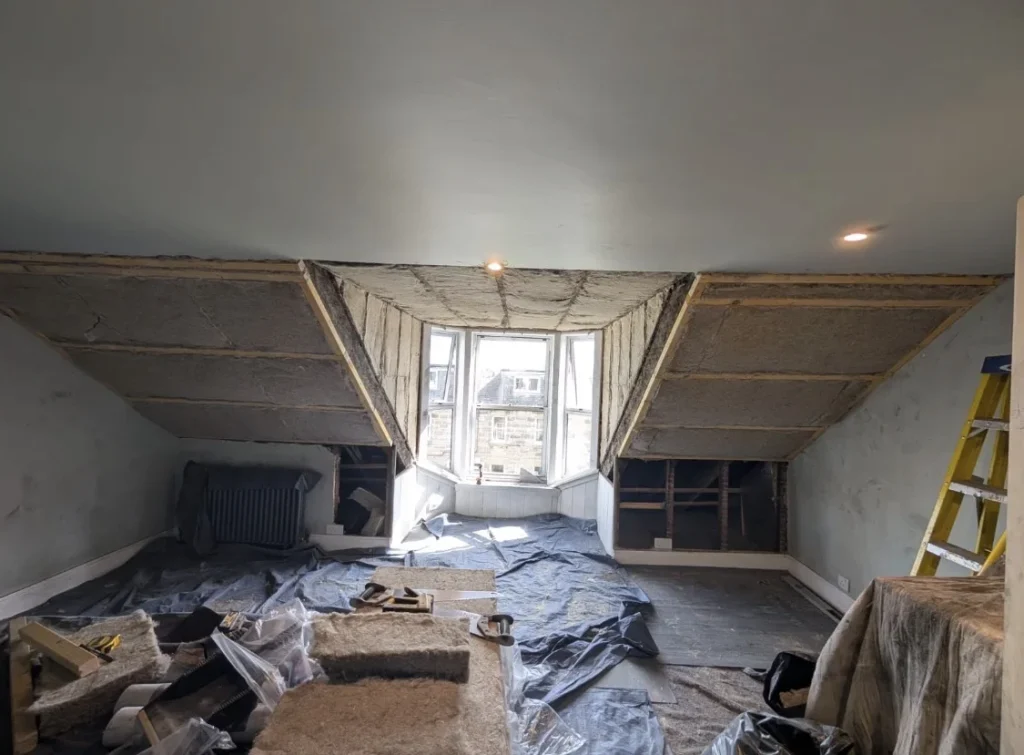
Hemp batts stacked ready to fit in a dormer room.
We know several of the people who run IndiNature, but the fibre is what sold us. Hemp is heavier than the glass wool in a standard loft, so summer heat takes longer to get through it. It also takes up damp from the air and gives it back as the weather turns.
IndiTherm: the hemp insulation made in Scotland
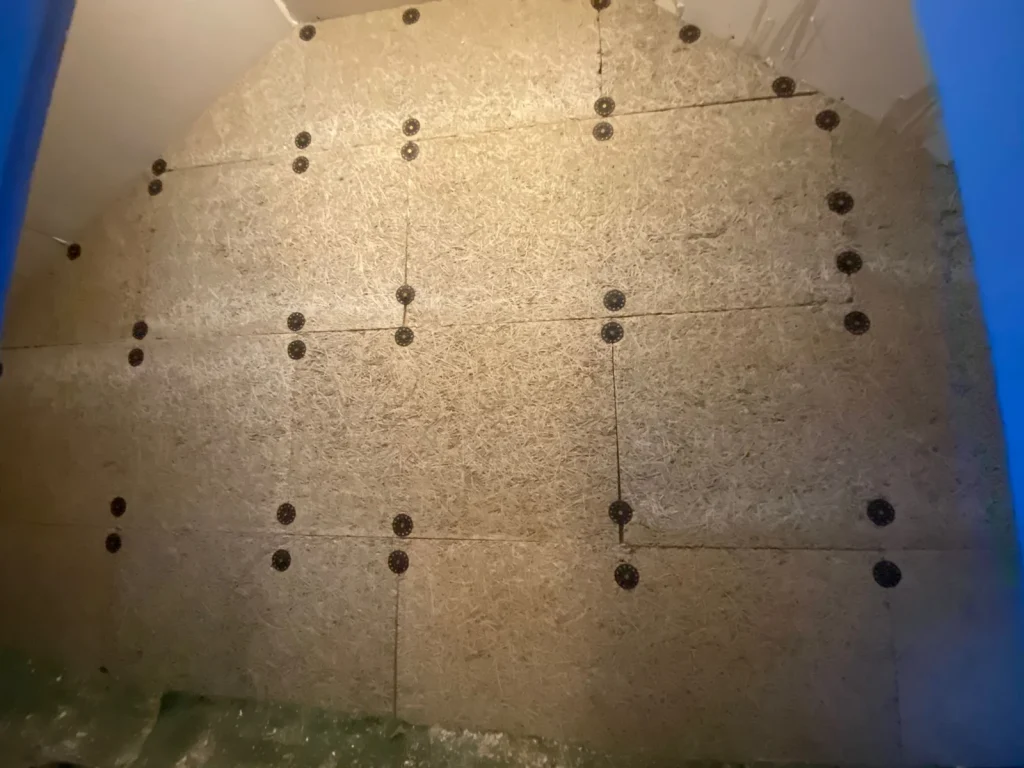
Hemp board fixed across a wall, close enough to see the fibre.
IndiTherm comes as soft batts of hemp fibre. We cut each batt to size and press it into place, so friction holds it with no gaps at the edges. That tight fit is half of what makes hemp work.
Made in Scotland.
IndiNature makes it here, and the company sends us homeowners who want it fitted.
Vapour-open.
Water vapour passes through it, which an old stone wall needs.
Takes up damp and gives it back.
The fibre buffers the swings between a wet week and a dry one.
Slows summer heat.
Its extra weight means heat from a hot roof takes longer to reach the room.
Hemp has its downsides too. It costs more than foam board, and it needs more depth to do the same job. Our comparison of hemp insulation and PIR goes through both, point by point.
Hemp on solid stone walls
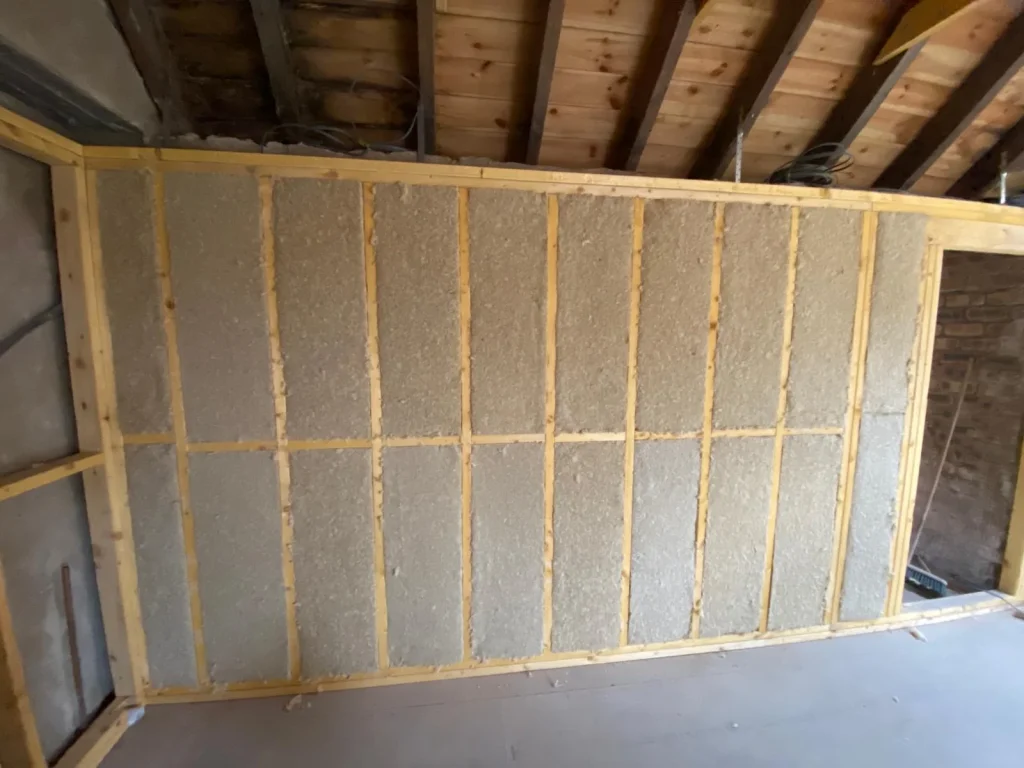
Hemp fitted into a timber frame on an old wall.
Stone walls are where hemp does its most important work, because it lets the wall go on drying.
- Lime parge on the bare stone, to fill the voids and flatten the face.
- Two 50mm layers of IndiTherm, compressed to 90mm inside a 45mm timber frame, so the hemp covers the timber.
- A 15mm wood wool board, for the plaster to grip.
- Two coats of lime plaster, with mesh.
A rendered or hard brick wall still gets hemp in a frame. There, a Pro Clima Intello Plus membrane and plasterboard take the place of wood wool and lime. A heritage wall job runs from £10,000 to £50,000. Our hemp and lime wall system is set out layer by layer.
Hemp loft insulation
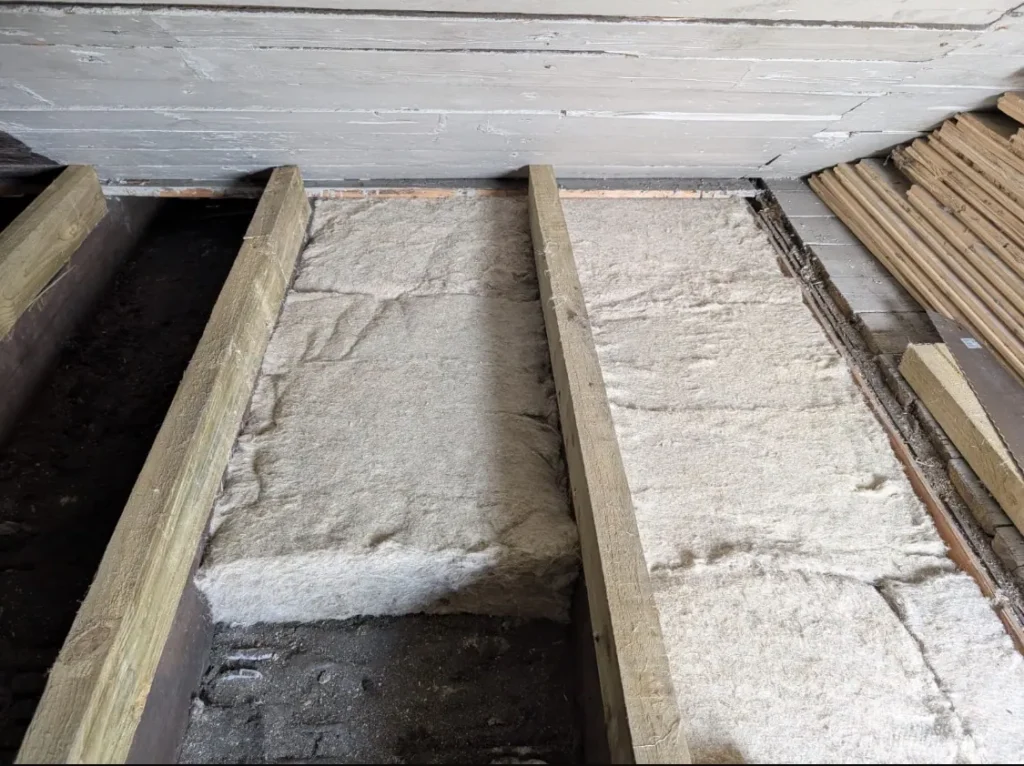
Hemp laid between the joists of a loft floor.
A loft is the simplest place to use hemp. It goes down in two layers.
First layer.
Hemp goes between the joists, up to the top of them, usually about 150mm thick, cut for a tight fit.
Second layer.
More hemp goes across the joists, taking the total to about 280mm.
The details.
The hatch, the tank and the pipes get insulated, and we check the loft still has air moving through it.
Our standard loft uses Knauf Earthwool, a glass wool, at 300mm. It costs £1,000 to £2,000 against £2,000 to £3,500 for hemp. Our loft insulation page covers both.
Ask for hemp and standard in the loft at the free survey, and we will price both side by side.
Book Your Free Survey →“Great service from the team. Very much feeling the benefit of the insulation already.”
Gordon Hay
Google review
Hemp under a suspended timber floor
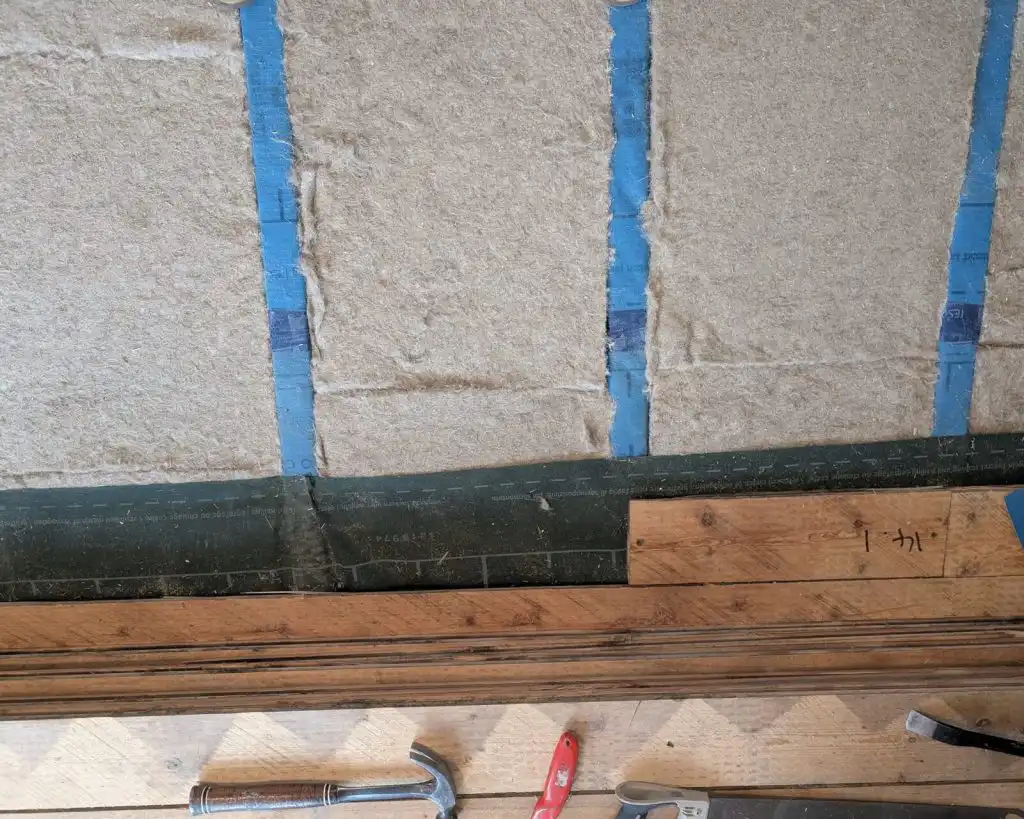
Hemp between floor joists with Pro Clima tape at the edges.
Under a timber floor, hemp goes between the joists, held by Pro Clima membranes and sealed with airtightness tapes. The tapes stop cold air coming up through the gaps. The space under your floor decides how we reach the joists.
A void at least 500mm deep. The team works in the crawl space and fits the hemp from underneath. Your floorboards stay down.
A shallow void, or a floor coming up anyway. We lift the boards and fit from above. That gives the best seal, so it suits a room you are already redoing.
A natural floor costs £3,000 to £5,000 before the grant, against £1,400 to £2,500 for our standard mineral wool floor. Our underfloor insulation page explains both routes.
Ask us at the free survey how deep the void under your floor is, and which way in suits it.
Book Your Free Survey →“Great job by Calum and his team insulating beneath my floor. House is noticeably warmer in cold weather.”
Captain Telemark
Google review
Hemp in an attic room
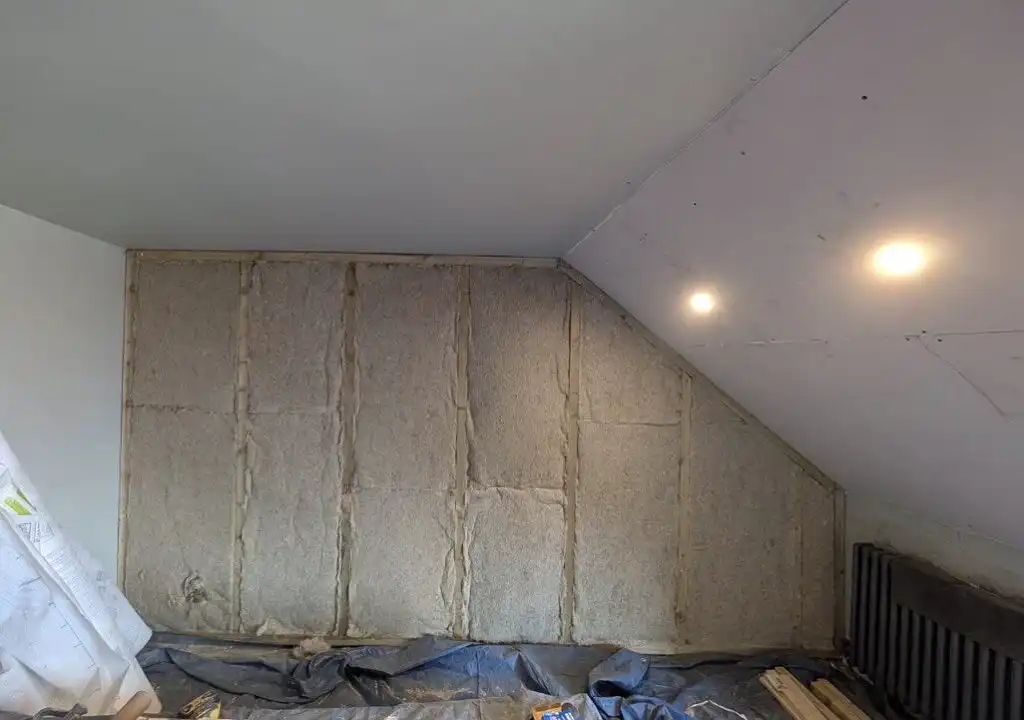
Hemp in the low wall of an attic room.
In an attic room, hemp goes between the rafters, with an air gap behind it to keep the roof dry. Our guide to insulating a coombed ceiling shows the build-up layer by layer.
What IndiTherm hemp costs, and the grant

A finished room in the roof that was insulated with hemp.
Hemp insulation in the UK costs more than glass wool or foam board. These are our own prices for each hemp job, with your share once the grant comes back.
Hemp loft. Your share is about £500 to £2,000 once the grant comes back.
Hemp under a timber floor. Your share is about £1,500 to £3,500.
Hemp attic room. Your share is about £7,000 to £15,000.
Hemp on stone walls. The grant takes up to £7,500 off.
Source: Insulation Installers Scotland price bands, 2026. Shares assume you qualify for the full Home Energy Scotland grant on that measure.
Work out your grant
Tick the jobs you want. Your share updates as you go.
Home Energy Scotland runs the main insulation grant. It pays up to 75% of the cost, and each measure has a cap that stays the same in every postcode:
- £1,500 for a loft or a floor.
- £3,000 for an attic room.
- £7,500 for solid stone walls.
The total for one home is capped at £7,500, or £9,000 in eligible rural and island postcodes. So in most postcodes a hemp wall job and a hemp loft together still top out at £7,500.
You apply, and no work starts until the written offer arrives. You pay our invoice in full. After a post-install EPC, Home Energy Scotland pays the grant back to you. Home Energy Scotland also offers an optional loan, up to a limit for each measure. Home Energy Scotland gives free, impartial advice on grants, loans and funding: homeenergyscotland.org or 0808 808 2282. The grant is for owner-occupiers. Wall, floor and attic-room grants need a TrustMark installer, which we are.
Book the free survey and we will price each hemp job you are thinking about, with the grant set against each one.
Book Your Free Survey →“A genuinely superb service. I can’t thank Calum and his team enough. … They were also extremely helpful with a grant application made in connection with the work.”
Peter McEwan
Google review
When we would not use hemp
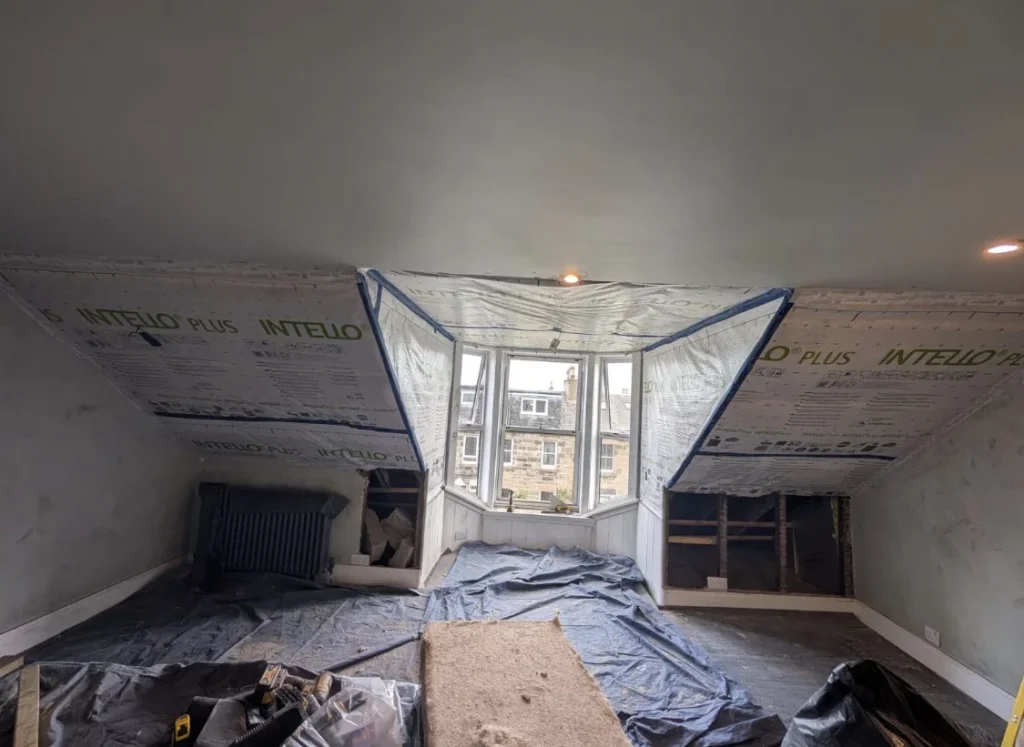
Airtight membrane across the slopes and cheeks of a dormer, where there is little room for thick insulation.
A good survey also tells you where hemp is the wrong pick. In these spots we reach for something else.
Under underfloor heating.
A foil-faced PIR board sits flat under the pipes and reflects heat up, so PIR is the right board there.
Tight window reveals.
If the full build-up would cover the window frame, a thinner board goes on the reveal.
Tight dormers in attic rooms.
A 20mm Marmox board goes in where a second layer of hemp will not fit.
A shallow floor void you want left alone.
Under 500mm, hemp goes in from above or not at all.
A tight budget on a loft.
Your share for a standard glass wool loft can be as little as £250 to £500 once the grant comes back.
Hemp insulation: common questions
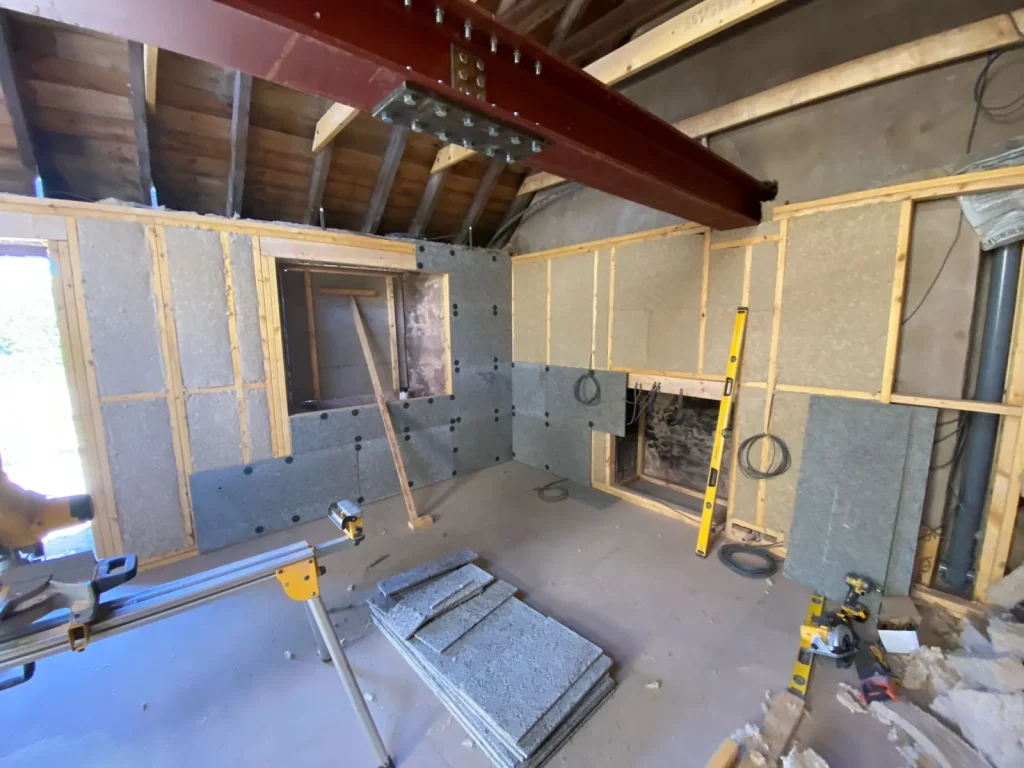
Hemp in the frame, with boards stacked ready to cut.
What is IndiTherm?
IndiTherm is a hemp fibre insulation made in Scotland by IndiNature. It comes as soft batts that we cut to fit tight between timbers in walls, lofts, floors and attic rooms.
Is hemp insulation worth it?
On a stone wall, we think so. It lets the wall dry and buffers damp. In a loft it costs about twice as much as glass wool, so it comes down to how much a natural material matters to you.
Can hemp insulation go in a loft?
Yes. We lay it in two layers to about 280mm: one between the joists, one across them.
Does hemp insulation get the Home Energy Scotland grant?
Yes, if you qualify. The grant funds the measure, and hemp counts. It pays up to 75%, capped per measure and per home. Wall, floor and attic-room grants need a TrustMark installer.
Can hemp go under my floor without lifting the boards?
Only if the void is at least 500mm deep. Below that, we lift the boards and fit from above, which also gives the best seal.
Do you fit other natural insulations?
Yes. We fit Sisalwool, made in Scotland from sisal and wool, and wood fibre where a job calls for them. Hemp is our first choice, partly because Sisalwool costs more.
Bring your questions about natural materials to the free survey and we will answer each one for your home.
Book Your Free Survey →“Really helped to explain everything I needed to know and some! Very sound advise that I didn’t get anywhere else.”
Imogen Kennedy
Google review
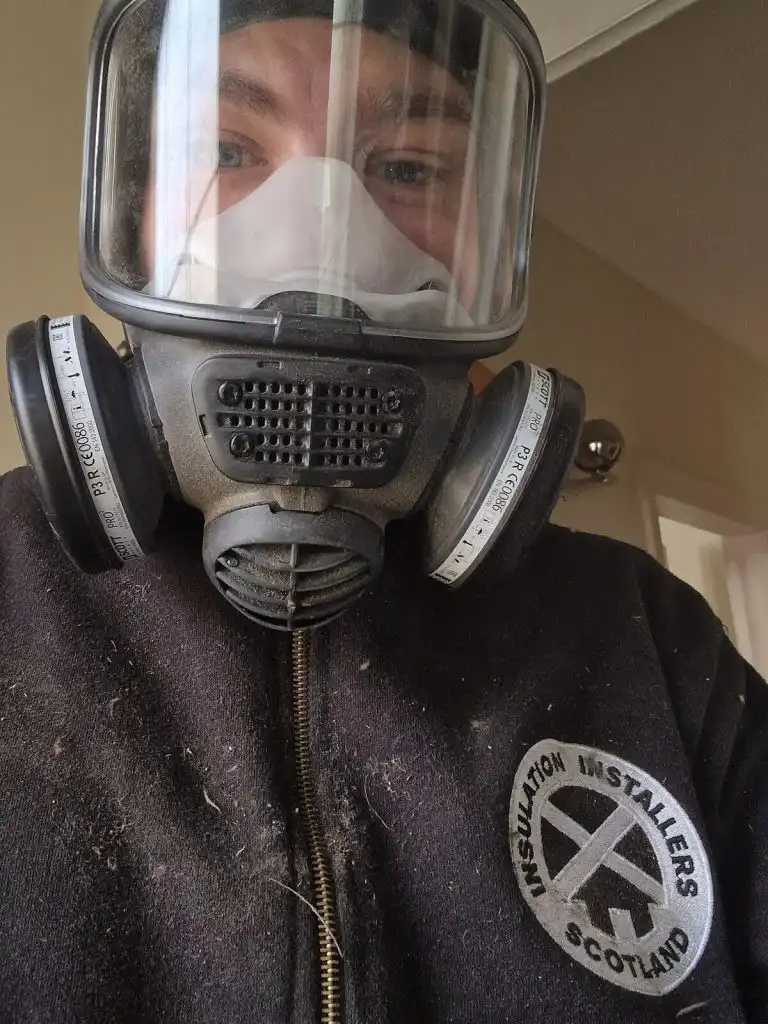
Calum on site.
Find out where hemp fits in your home
We look at your walls, loft, floors and attic. Then we tell you where hemp earns its place, and where a cheaper material does the same job.
We email your quote after the visit.
Or call us on 0141 465 5812


