


What you pay for an EPS bead fill, why a camera checks inside your wall first, and how the £1,500 grant changes your share.
Call us: 0141 465 5812
Your share of a cavity fill is £500 to £2,500 once a Home Energy Scotland grant comes back. The cavity wall insulation cost on our invoice is £2,000 to £4,000. You pay our invoice. Home Energy Scotland pays the grant to you once it approves your claim. We fill the gap in your walls with Energystore EPS bead. It is a small polystyrene bead that does not soak up water. First, though, a camera looks inside your wall.
Kenny Berrie had his walls filled and his loft done. We lifted his loft boards and laid them back. “All arranged through Callum,” he wrote.
- A cavity fill costs £2,000 to £4,000 with us. With an approved grant, your share is £500 to £2,500 once it comes back.
- You pay our invoice in full. Home Energy Scotland pays the grant back to you once it approves your claim.
- The grant pays up to 75%, capped at £1,500. Above £2,000, the rest is yours.
- We fill with EPS bead. It does not soak up water, so it is far less likely to carry damp across the gap.
- A camera checks inside every wall before we price a fill.
- We fill cavity walls across Greater Glasgow, within about an hour of the city.
A cavity fill takes about a day. Your price gets set before that day, when someone checks if your wall should be filled at all.
Cavity wall insulation cost in Scotland
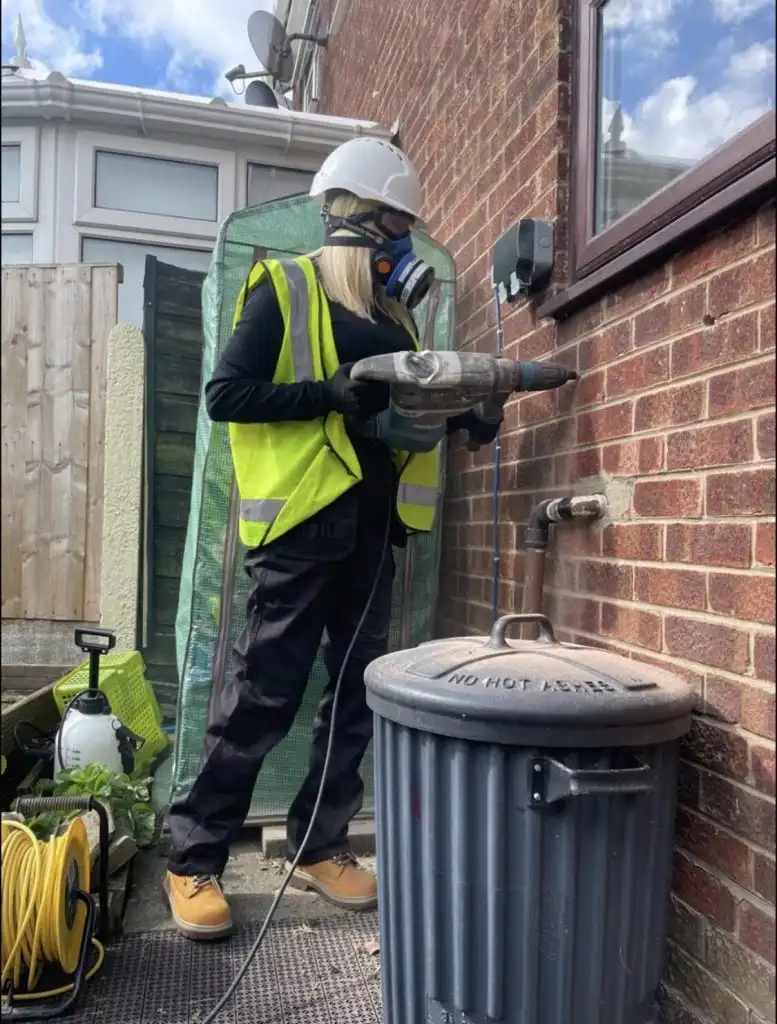
Drilling the fill pattern in a brick wall.
Our price for a cavity fill is £2,000 to £4,000. A bigger house has more wall to fill, so it sits higher in the band. The extra work around the walls moves it too. This table shows every stage in the price.
Survey
What we do: Check the walls from outside, then look inside the cavity with a borescope camera
Why it is there: Shows whether your wall suits a fill
Air bricks
What we do: Take out the vents for the space under your floor and sleeve them through the cavity
Why it is there: Keeps air moving under your floor
Extractor fans
What we do: Core out the fan holes and fit flues. Our electrician wires the fans and issues a minor works certificate
Why it is there: Keeps the fans venting outside
Drilling
What we do: Drill the walls in a set pattern, then check the whole cavity with the camera
Why it is there: Finds rubble that could bridge the damp-proof course
Filling
What we do: Fill each wall from the bottom up with EPS bead
Why it is there: So the whole cavity gets filled
Making good
What we do: Fill the drill holes with mortar matched to your brick
Why it is there: Leaves the outside tidy
Pick cavity walls, add any other measures, and see the grant caps and your share. It gives an estimate. The survey gives the real price.
Work out your grant
Tick the jobs you want. Your share updates as you go.
Every job also comes with photos of the work and a 25-year workmanship guarantee. There is no deposit. Our invoice is due within 7 days of completion.
More wall means a higher price. So do more air bricks to sleeve and more fans to flue.
Cavity wall insulation cost after the grant
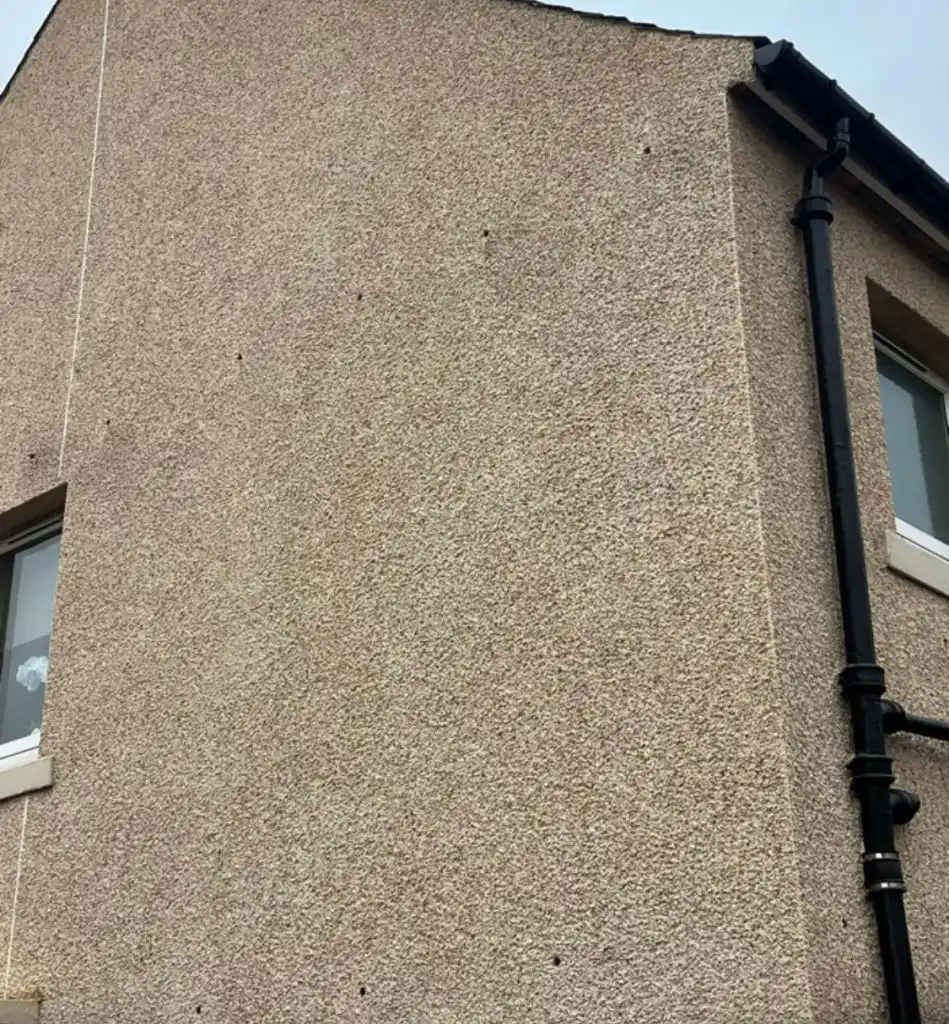
A finished wall, the holes made good.
Home Energy Scotland pays up to 75% of the cost of cavity wall insulation. The grant for cavity walls stops at £1,500.
You pay our invoice in full. Home Energy Scotland pays the grant back to you once it approves your claim. The last column shows your share once the grant comes back.
Job price: £2,000
75% of the price: £1,500
Grant after the £1,500 cap: £1,500
Your share: £500
Job price: £3,000
75% of the price: £2,250
Grant after the £1,500 cap: £1,500
Your share: £1,500
Job price: £4,000
75% of the price: £3,000
Grant after the £1,500 cap: £1,500
Your share: £2,500
Grant caps checked on homeenergyscotland.org on 13 November 2026. Home Energy Scotland assesses every application.
Past £2,000, the cap holds and each extra pound is yours. Home Energy Scotland also offers an optional loan, up to a limit set for each measure, and runs its own credit checks. Home Energy Scotland gives free, impartial advice on grants, loans and funding: homeenergyscotland.org or 0808 808 2282.
Home Energy Scotland runs the main grant among the insulation grants in Scotland, and you apply for it yourself. You must own the home and live in it as your main home. You need an EPC that recommends a cavity fill. A measure another scheme already funds cannot get this grant. Then the steps go in this order:
- You apply, with our itemised quote and your EPC.
- You wait for Home Energy Scotland’s written offer. We drill no hole before it.
- We fill the walls.
- A new EPC after the work goes in with your claim. We can book it.
- Home Energy Scotland pays the grant back to you.
Home Energy Scotland decides who qualifies. We answer your questions and send the installer paperwork.
If your EPC recommends a cavity fill, it must go in before other measures get grant money. The same goes for the loft. Doing both draws two grants of up to £1,500 each, and our loft insulation cost runs £1,000 to £2,000.
Book a survey and get one written price, with the grant and your own share set out in pounds.
Book Your Free Survey →“There was good pre-installation support too, and all my questions and concerns were answered.”
Bluemallers1
Cavity wall insulation · Google review
Why we fill cavities with EPS bead instead of wool
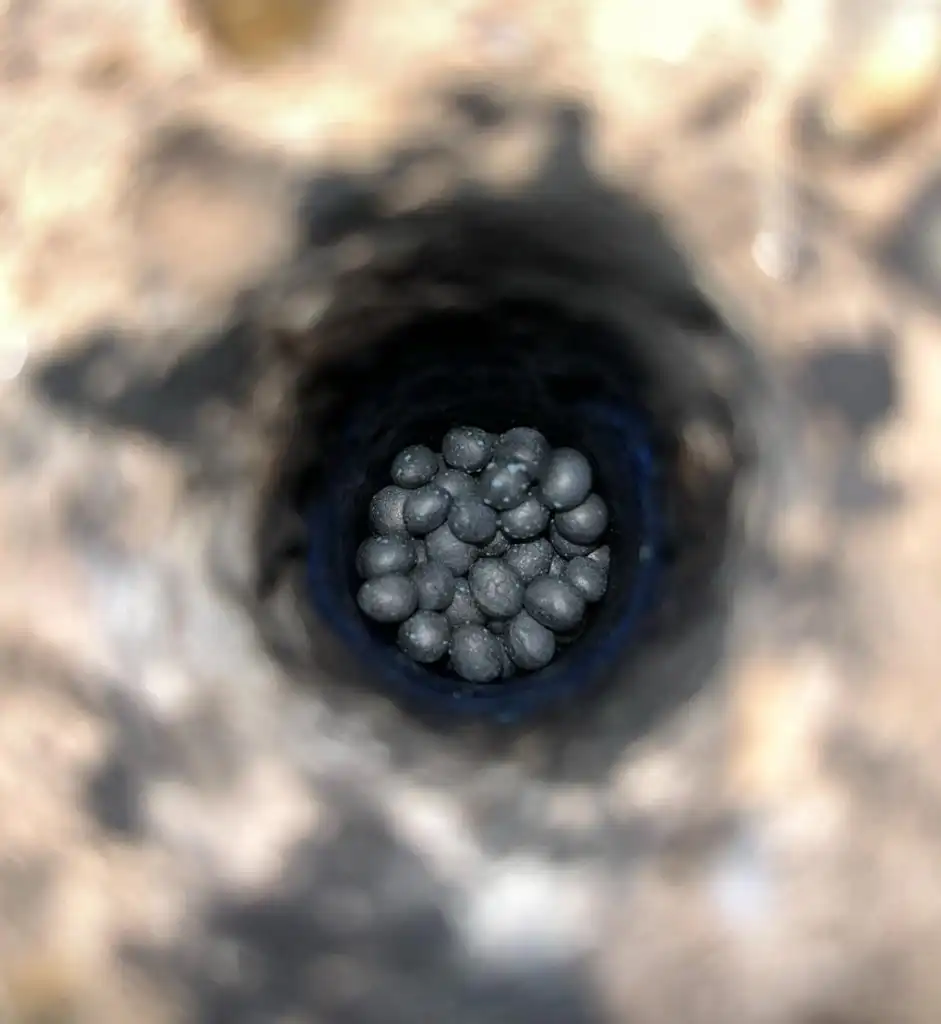
EPS bead seen through a drill hole.
Some older cavity fills used mineral wool. Older wool fills could carry damp from the outer wall to the inner one. That can show up as damp on your inside walls.
We use Energystore bonded EPS bead. It takes on no water, so damp is far less likely to cross the gap.
We fill with EPS bead, not mineral wool, on every cavity wall insulation job.
The borescope check, and why it comes before any price
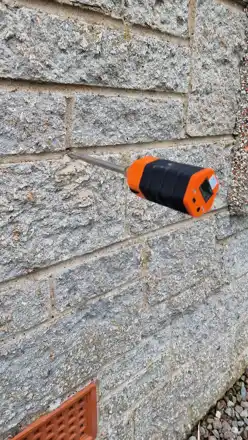
A borescope camera checks the cavity before any price.
A borescope is a small camera on a thin cable. We drill one small hole, feed the camera into the cavity and look.
The camera shows us:
- whether the wall has a cavity at all
- whether the gap is clear, or already part-filled
- whether rubble sits at the bottom, where it could let damp past the damp-proof course
The surveyor also checks how much wind and rain hits the wall, and what shape it is in. If a wall is too exposed, already damp or in poor repair, we tell you. Then we leave it unfilled. A fill in the wrong wall causes more harm than good.
Repairs come first, too. The Energy Saving Trust says to fix bad pointing, gutters and downpipes before any wall insulation goes in. If your wall needs that, the survey will say so.
Find out at the survey if your walls suit a fill, before anyone quotes you a price.
Book Your Free Survey →“Honest, hardworking, meticulous and friendly, willing to go extra mile if necessary.”
Szymon Czaja
Google review
When a cavity fill is the wrong job for your home
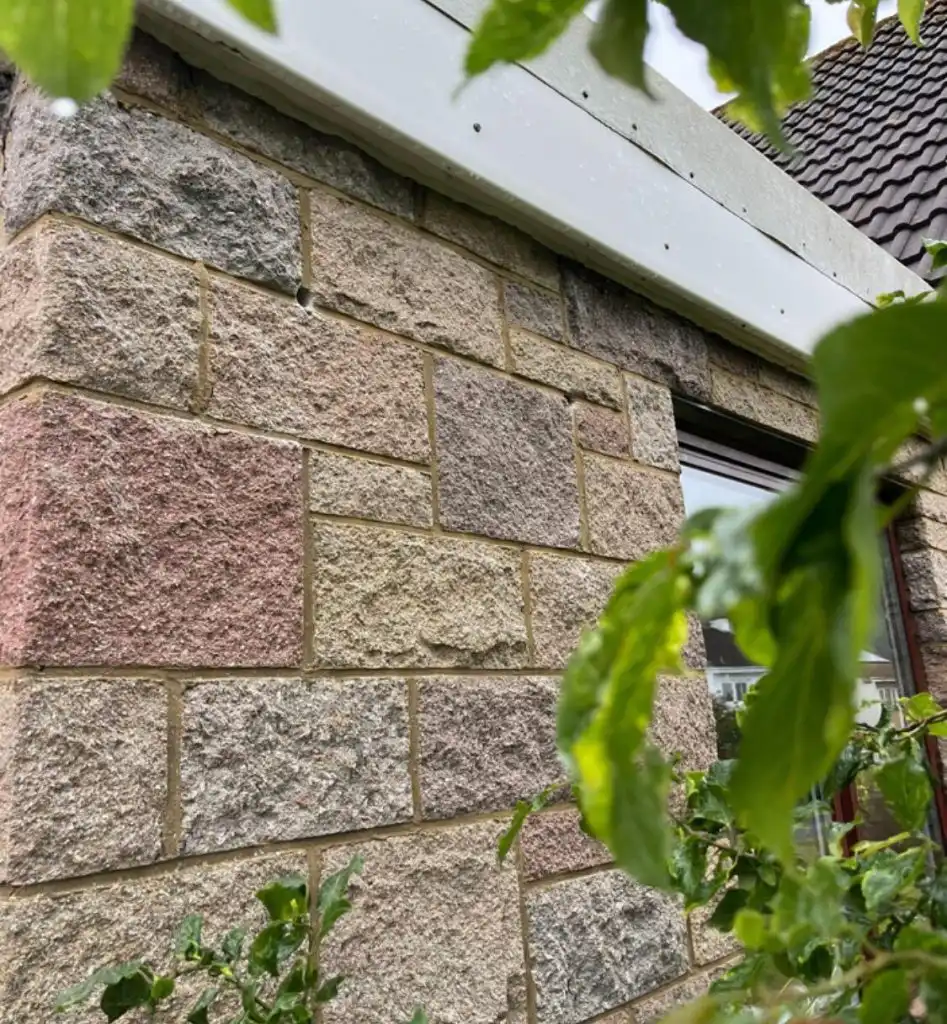
A stone house. Not every wall is a cavity.
Many homes built from about the 1920s on have cavity walls. Older stone homes have solid walls, with no gap to fill. The Energy Saving Trust also says a gap under 50mm is too narrow to fill.
If your walls are solid stone, the fix goes on the inside face of the wall. That job is internal wall insulation for stone homes, and it has its own grant cap.
Say your EPC recommends a cavity fill, but we turn the wall down. Home Energy Scotland then needs a note from an EPC assessor before it funds other measures. Our assessor can write it.
If the survey says no fill, you hear that before you pay a penny.
Frequently asked questions
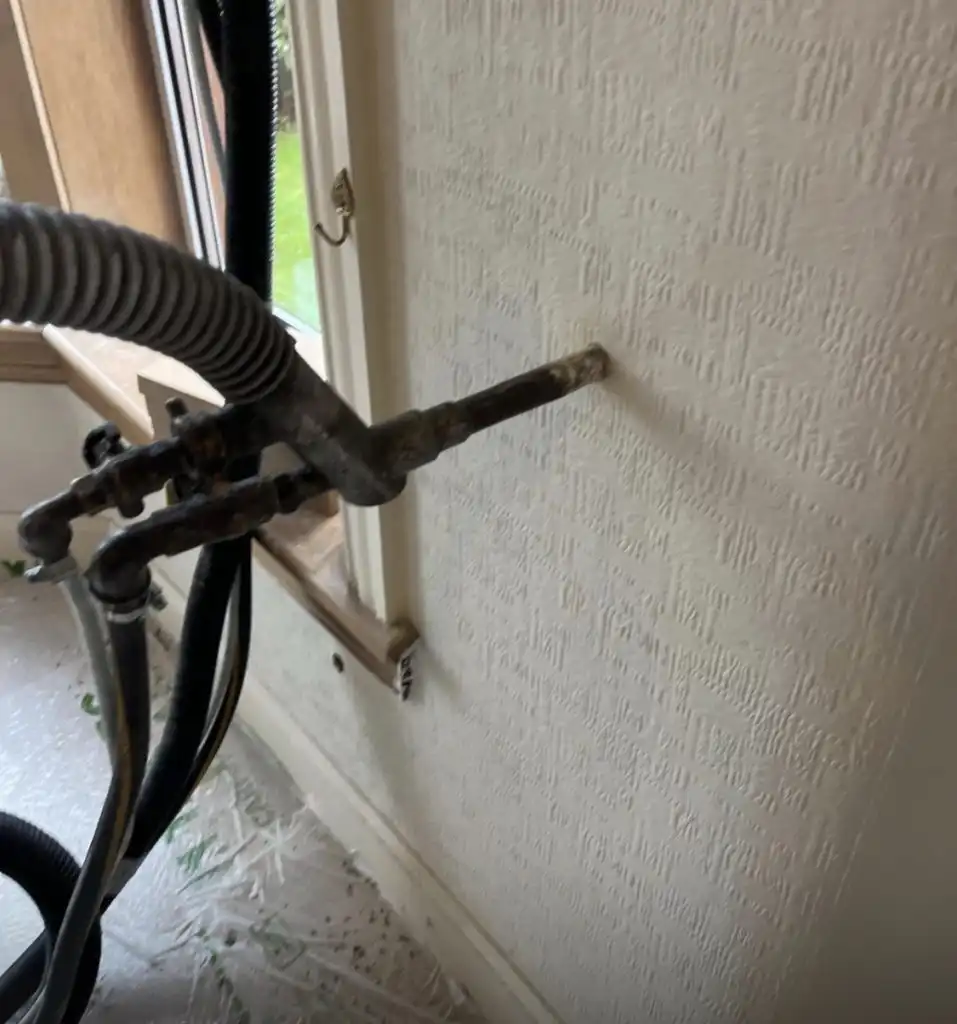
Fill work on a wall beside a window.
How much does cavity wall insulation cost in Scotland?
A cavity fill with us costs £2,000 to £4,000. That includes the camera check, sleeving the air bricks, the EPS bead fill and making good. Bigger houses sit higher in the band.
How much is cavity wall insulation after the grant?
Your share is £500 to £2,500 once an approved grant comes back. You pay our invoice. Home Energy Scotland pays the grant to you once it approves your claim. The grant covers up to 75%, capped at £1,500 for cavity walls.
Is there a cavity wall insulation cost calculator?
Yes. The calculator on this page gives an estimate, with the grant cap and your share. The free survey then gives you a fixed written price.
Does the borescope check cost extra?
No. Our price covers every stage of the job, the camera check included. We need it before we can price a fill.
How long does cavity wall insulation take?
A typical cavity fill takes one day. A bigger house can run into a second day.
Why are some cavity wall quotes much cheaper?
A low quote can skip the camera check, the air brick sleeves or the fan flues. Some use wool instead of bead. Ask any installer, us included, to name the product and list each stage.
How much does cavity wall insulation save?
That depends on your house, its size and how you heat it. We do not quote a saving we cannot back up. Your EPC shows how the measure would change your home’s rating.
Bring your EPC to the survey, or ask us to arrange one. Your quote will show the grant in pounds.
Book Your Free Survey →“From initial survey and quote by Calum, through to the installation by the team of Abs, Kyle and Jamie I have been well impressed.”
Luke Healy
Google review
A camera in your wall before a price on paper
Every figure here is a band. Your price comes after the camera has looked inside your wall and the surveyor has walked round the house.
You get one written price, with the grant and your own share in pounds.
Or call us on 0141 465 5812


