


This is how to insulate stone walls in Scotland: do them last, and work from the inside. The loft, floors and windows come first, and any rain getting into the wall gets fixed. Then the old plaster comes off, and a lime coat fills and flattens the bare stone. Hemp goes into a timber frame tight against it. A wood wool board and two coats of lime plaster finish the wall. On our build-up, plan on about 120mm coming off each wall.
- Historic Environment Scotland puts walls last, so do the loft, floors and windows first.
- Fix leaks, gutters and bad pointing before the walls, since insulation cannot cure a leak.
- Outside insulation seldom suits a sandstone front, so on most stone homes the work goes on inside.
- On sandstone we fit a lime parge, IndiTherm hemp in a 45mm frame, a 15mm wood wool board and lime plaster.
- Plan on losing about 120mm of room on each wall you insulate.
- If you qualify, the wall grant pays up to 75%, capped at £7,500. A DIY job gets none of it.
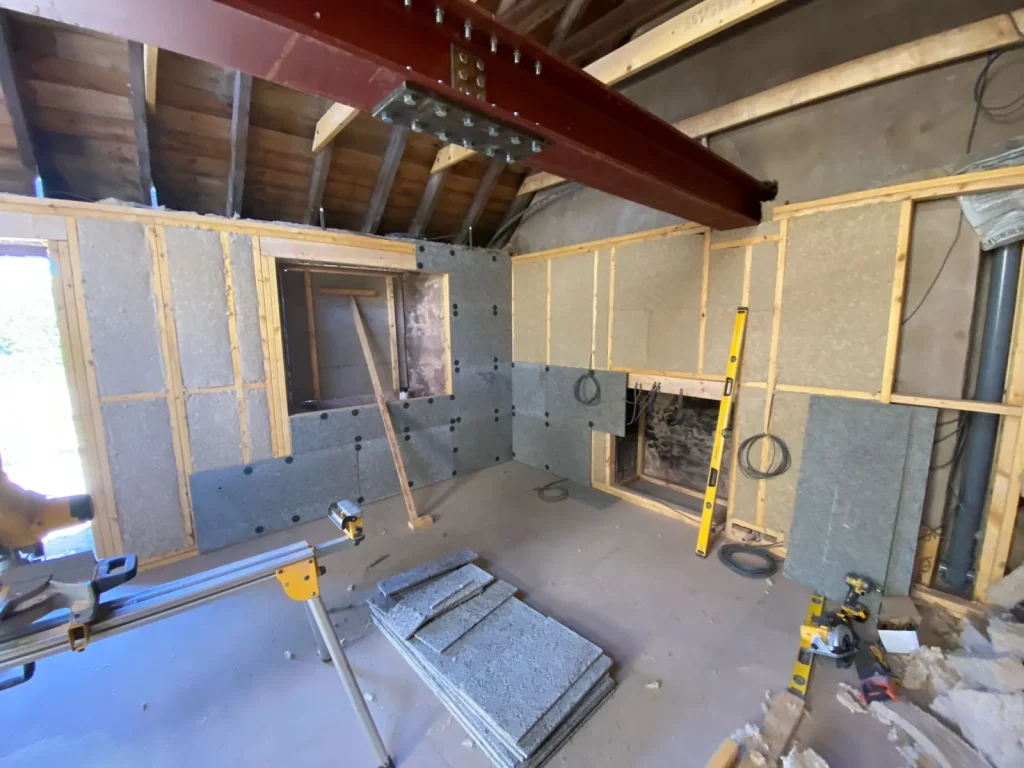
Hemp fitted into a timber frame on a wall, with the next boards stacked ready.
Ricky Munday had this done in his top-floor tenement flat in a conservation area. The team stripped his cold walls back to stone and gave them a lime parge. Then came the insulation, wood wool boards and a lime skim. Our quote was higher than another he had. He chose us after Calum talked him through the pros and cons of each option for an old home.
How to insulate stone walls, step by step

A wall stripped back to the stone, ready for the lime parge.
Historic Environment Scotland’s Engine Shed guidance puts the walls last on your list. A loft, a floor or a window is often cheaper and easier to improve. Home Energy Scotland also asks for the loft or cavity to be done first if your EPC recommends it. With those done, this is the wall job on sandstone or rubble, in the order we work.
Loft, floors and windows.
These come first. They often add more warmth for less money.
Check the outside.
Gutters, downpipes, pointing and any render come next.
Strip to the stone.
The old lath and plaster come off, cornice and panelling on that wall included.
Parge the stone.
A coat of lime fills the voids and flattens the face, so no air pocket sits behind the insulation.
Frame and fill.
A 45mm timber frame goes up, with two 50mm layers of hemp compressed to 90mm inside it.
Board it.
A 15mm wood wool board gives the lime plaster something solid to grip.
Plaster in lime.
Two coats go on with a mesh, then the wall dries before paint.
Skirtings, window boards, radiators and sockets go back once the plaster is fully dry.
Stop the water before you insulate a stone wall
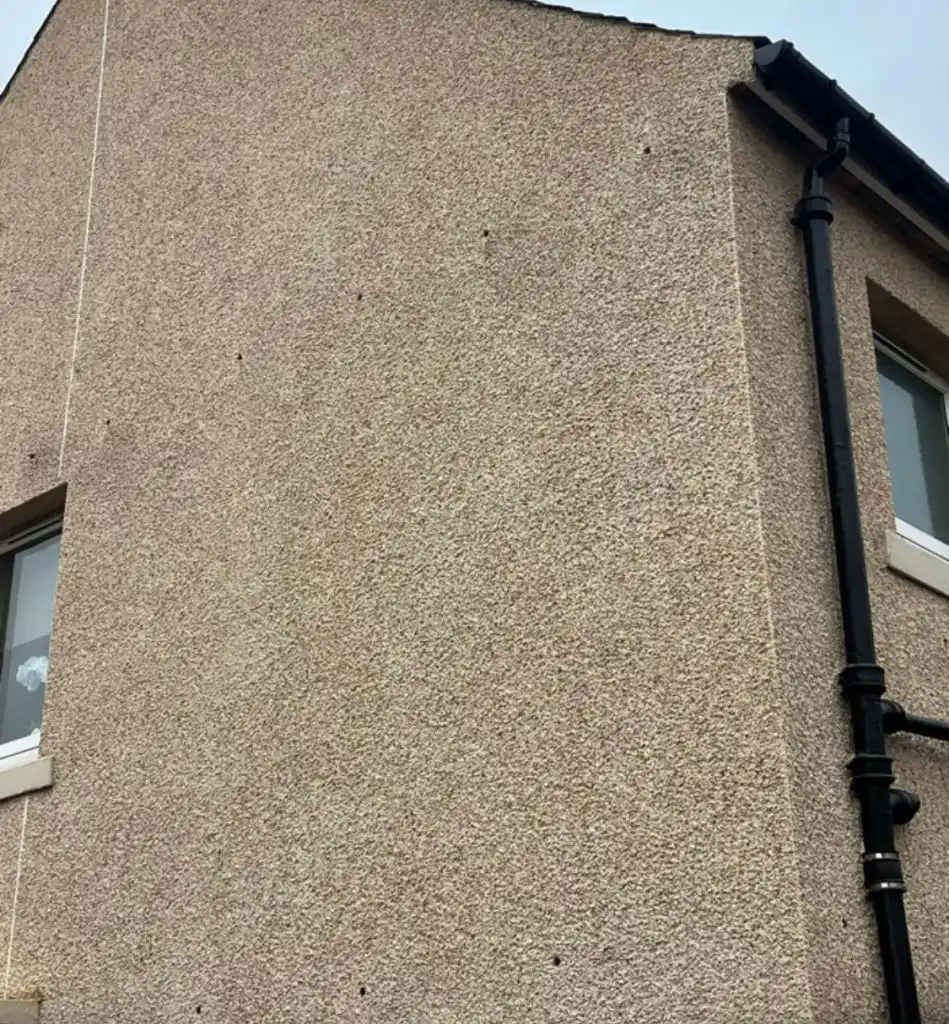
The outside of a wall with its gutter and downpipe, the first thing we check.
Insulation on the inside cuts the heat that used to reach the stone from your room. So the stone runs colder in winter and takes longer to dry. Any water already getting in matters more once the job is done.
Gutters and downpipes.
A blocked gutter or a cracked pipe can pour water down one patch of wall.
Hard cement pointing.
It can hold rain in the stone, where lime pointing would let it out.
Cracked render.
Water gets in at the cracks and has a hard time getting out.
An old leak.
A wall soaked by a past leak starts the job wetter than it should.
Sealed paint outside.
Some outdoor paints trap the water the stone needs to lose.
Some of these are a job for a roofer or a stonemason, and they come first. Our guide on how a solid stone wall takes up and gives back moisture explains why lime and cement behave in such different ways.
At the free survey we look at how your walls are pointed and finished outside, and at any sign of damp, before we price a thing.
Book Your Free Survey →“I wouldn’t have trusted anyone else but Calum to come up with a solution for my flat as moisture/condensation was my big worry.”
Gigi B
Google review
Inside or outside the wall
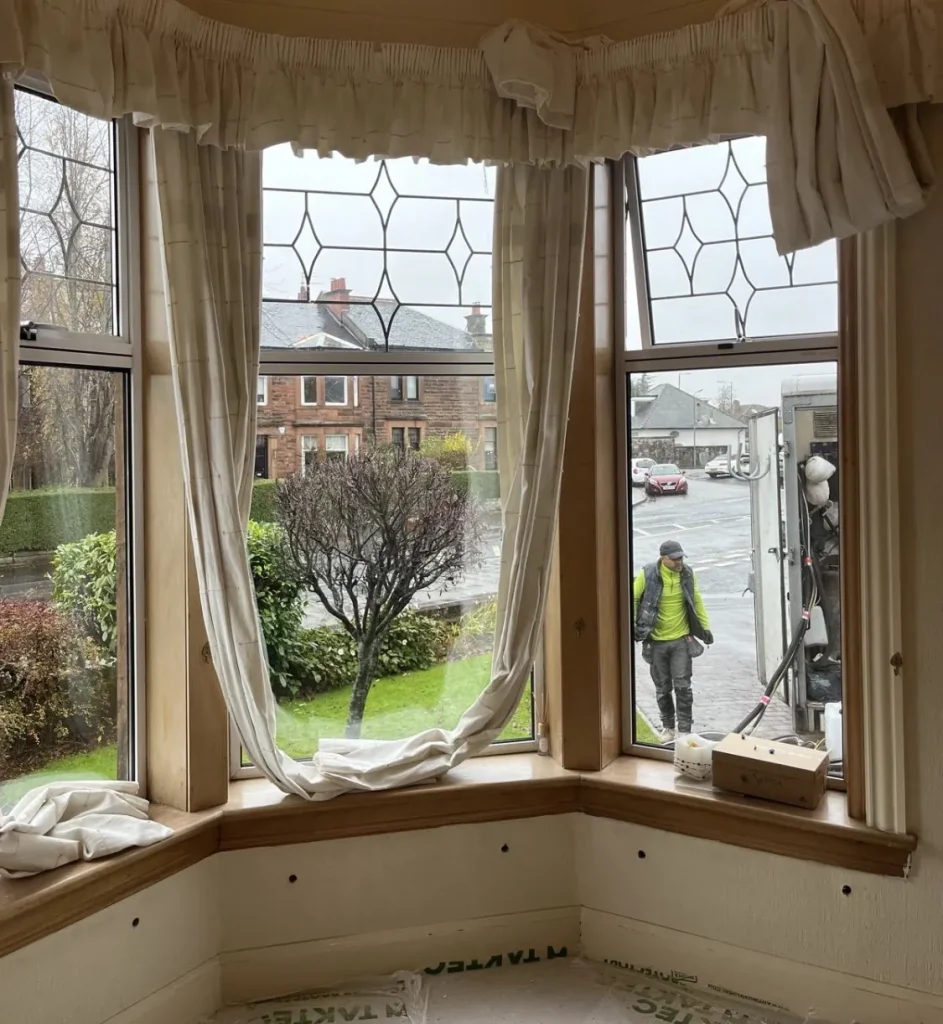
A bay window in a Glasgow sandstone terrace, seen from inside. On a stone front like this the work goes on the inside.
Outside insulation wraps the wall in boards and a new render. Historic Environment Scotland says it is unlikely to suit many old buildings, since it hides good stonework. It can suit a wall whose harl or render is failing. It can also suit a plain gable or back wall.
On a sandstone front, planners in conservation areas seldom allow it. So on most stone homes the work moves indoors. Glasgow alone has around 73,000 pre-1919 tenement flats. They run from Hyndland in the West End to Strathbungo on the Southside. Their fronts stay as they are, and the warmth goes on behind them.
Inside work has a cost of its own. You lose some floor space, and the plaster, cornice and skirting on that wall come off. Our page on inside and outside wall insulation sets the two side by side.
The layers, from the stone out

Hemp going into a timber frame on a wall under renovation.
Each layer does one job, and each one lets water vapour pass. That way the wall can still dry towards your room as well as outwards.
- Lime parge. A lime coat on the bare stone. It fills the voids and flattens the face, so no air pocket is left behind the insulation.
- Hemp in a timber frame. Two 50mm layers of IndiTherm hemp, made in Scotland, compressed to 90mm inside a 45mm frame. The hemp covers the timber too, so the frame does not become a cold line.
- Wood wool board. A 15mm board made of wood strands. Lime plaster grips its rough face.
- Lime plaster. Two coats, with a mesh set into them.
Hemp takes up damp from the air in a wet spell and gives it back as the weather turns. Lime does much the same. So water is far less likely to sit trapped against the stone.
Window reveals get the full build-up where there is room. Where the full build-up would reach the window frame, we use a thinner reveal detail, picked at the survey. A rendered or low-absorption brick wall can take a vapour-closed build-up instead, with a Pro Clima Intello Plus membrane and plasterboard.
The last layer is the paint. A plastic-based emulsion would seal the lime, so our aftercare pack names paints that suit it. Our teams photograph each layer as it goes in, so you see the parts that end up hidden. The work carries our 25-year workmanship guarantee.
For the full system and photos from our jobs, see our main page on insulating stone walls.
Ask to see photos of this same build-up on a wall like yours when we come out for the free survey.
Book Your Free Survey →“The work was completed on the agreed day, and he even sent photos over for me to see.”
Fiona Ross
Google review
Breathable insulation for stone walls: what to use and what to avoid

Wood wool board fixed across two walls, the layer the lime plaster grips.
A material suits stone if water vapour can pass through it and it copes with a little damp. Foam boards and foils block vapour. On a stone wall, that can leave water sitting at the face of the stone, where nobody sees it.
Hemp, wood fibre or Sisalwool insulation. A lime parge and lime plaster. Wood wool board. A breathable paint on the finish.
Foil-backed plastic foam board stuck to the stone with blobs of glue. Spray foam. Cement plaster on bare stone. Plastic-based paint over lime.
Foam board has its place. We fit PIR, a foil-faced plastic foam board, under underfloor heating. Glued to the back of a sandstone wall, it can trap water at the stone.
The three natural options each behave in their own way. Our comparison of wood fibre, wood wool and hemp takes them one at a time.
Can you insulate stone walls yourself?

A stone wall with a lime parge coat. Getting the face flat is the skilled part.
You can buy hemp, lime and wood wool board. The hard parts are the lime work and the airtight seal round each window. Lime takes time to set and needs care in cold or wet weather. A gap at a window frame lets warm, damp air reach the cold stone.
There is a cost side too. Home Energy Scotland only funds solid wall insulation fitted by a TrustMark-registered installer. So a DIY job loses the grant.
Clear the gutters
and look at the downpipes after heavy rain.
Note any damp patches
inside, with the date and the weather.
Look at the pointing.
Hard grey cement pointing is worth a photo.
List the features you want kept, such as cornicing, shutters or panelling.
Stone wall insulation cost and the grant

A lime-plastered room, ready for paint.
A vapour-open job on a stone home runs from £10,000 to £50,000, depending on how many walls and rooms you do. The jobs we win often sit between £14,000 and £25,000.
Home Energy Scotland’s grant is the main one for insulation. You apply to it yourself, and we answer your questions and send the installer paperwork.
Up to 75% of the cost, capped at £7,500 for solid wall insulation.
The wall cap stays at £7,500 in every postcode. The £9,000 cap only applies to a whole-house total in eligible rural and island postcodes.
Apply, then wait.
You need an EPC that recommends the work. No work can start until the written offer arrives.
Who pays what.
You pay our invoice. After a post-install EPC, Home Energy Scotland pays the grant to you once it approves your claim.
An optional loan
Home Energy Scotland offers one, up to a limit set for each measure, on its own terms and checks. Home Energy Scotland gives free, impartial advice on grants, loans and funding: homeenergyscotland.org or 0808 808 2282.
Owner-occupiers only, and the work must be fitted by a TrustMark installer.
Work out your grant
Tick the jobs you want. Your share updates as you go.
Take a £20,000 job. Three quarters of that is £15,000, but the cap stops the grant at £7,500. You pay our £20,000 invoice, and your share is £12,500 once the grant comes back. Not everyone qualifies, so check before you plan around it.
Book the free survey and you get a written quote with the grant worked out in pounds for your walls.
Book Your Free Survey →“A couple of minor mistakes on my part with the grant application were quickly resolved by the very helpful IIS guys. … The grant money was paid within a week too, so overall I’m very pleased I went ahead with it.”
David Skee
Google review
How to insulate stone walls: common questions
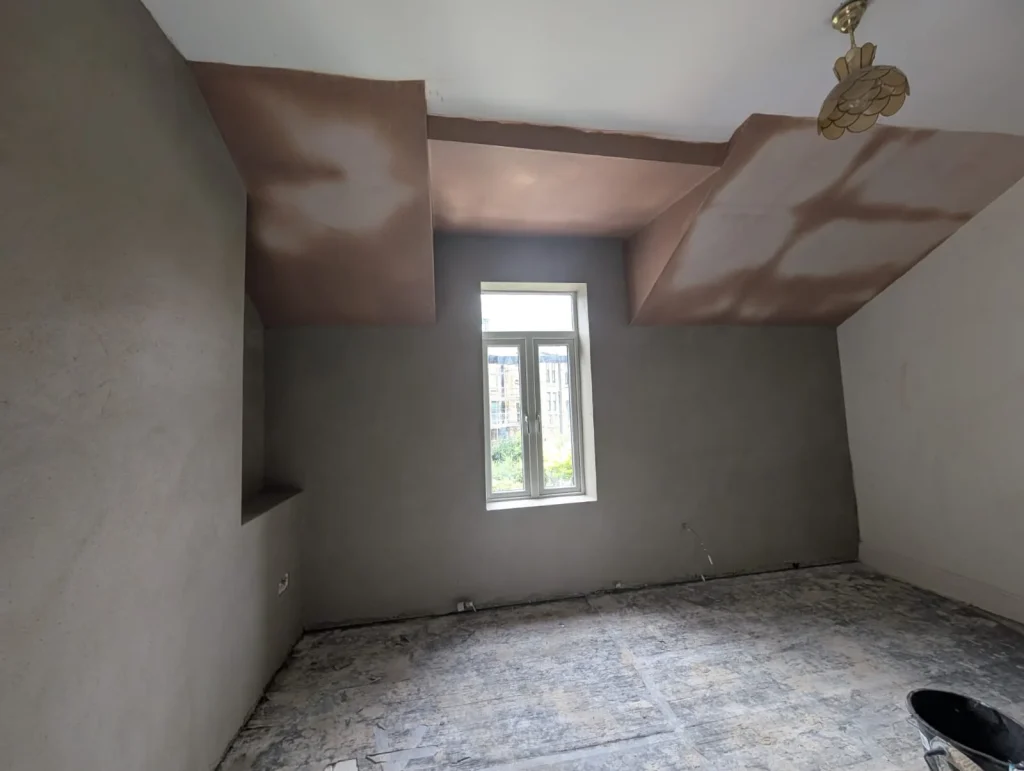
The wall boarded, with the first plaster coats going on.
How do you insulate old stone walls?
Last, and from the inside, with layers that let the stone dry. Do the loft, floors and windows first and fix any water getting in. Then strip to the stone, parge it in lime, fit hemp in a timber frame, and finish with wood wool board and lime plaster.
What is the best insulation for stone walls?
On sandstone, we fit IndiTherm hemp in a timber frame. It lets vapour pass, handles a little damp and fills the frame with no gaps. Wood fibre and Sisalwool can also suit a stone wall.
Do you have to remove the old plaster?
In our system, yes. Historic Environment Scotland describes ways to keep an old lining, such as blowing insulation in behind it. We strip back to stone for a reason. Lath and plaster leaves an air pocket behind it, and that pocket turns colder once the room side is insulated. Damp air that reaches it can rot the timber laths. Our guide to insulation and period features covers what happens to cornicing and panelling.
How much room will I lose?
Plan on about 120mm off each insulated wall. That is our build-up measured from the bare stone, and the survey confirms the figure for your walls.
Can I use PIR board on a stone wall?
We would not on sandstone. Foil-faced foam board blocks vapour, so water can sit at the face of the stone. We keep PIR for jobs like insulating under underfloor heating.
Will insulation cause damp in a stone wall?
It is far less likely to if you fix the water first and every layer lets vapour pass. Trouble comes from leaks left in place, gaps in the fitting and materials that seal the stone.
Is there a grant for stone wall insulation in Scotland?
Yes, if you qualify. Home Energy Scotland can pay up to 75% of the cost, capped at £7,500 for the walls in every postcode. You pay our invoice. Home Energy Scotland pays the grant to you once it approves your claim. A TrustMark installer must fit it.
Bring your list of damp patches and features to keep, and we will go through each wall with you at the free survey.
Book Your Free Survey →“Calum and his workers did a great job. He was competent and gave good advice, he was reliable and phone back when I asked him to, and he even finished the job a day earlier than planned.”
Secretary EAHN
Google review
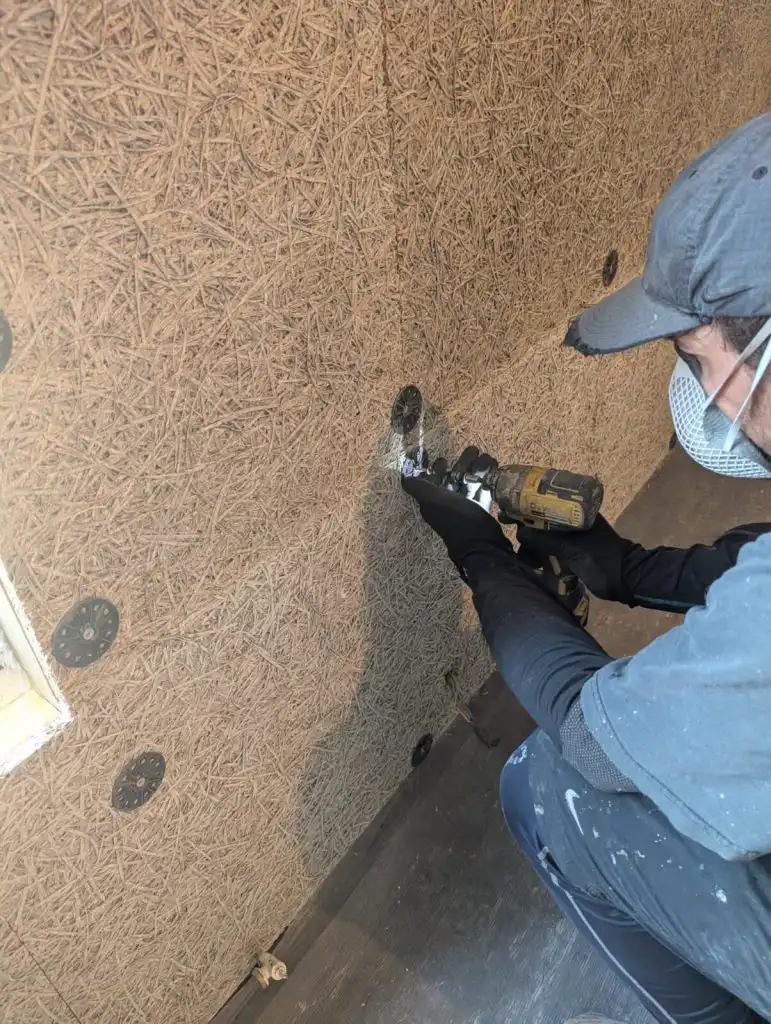
Fixing board to a wall on a job.
Find out what your stone walls need
We look at your walls outside and in. Then we tell you which build-up each wall can take, and what your share comes to once the grant is back.
We email your quote after the visit.
Or call us on 0141 465 5812


