


Fit the insulation for underfloor heating first. On a suspended timber floor, it goes between the joists. It sits under the pipes and goes in before the heating. We use foil-faced PIR, a stiff foam board with a shiny face. The board stops warmth sinking into the cold void below. The job costs £2,500 to £4,500. Your share is £1,000 to £3,000 once the Home Energy Scotland grant comes back.
- On a timber floor, the insulation goes between the joists, below the heating. It goes in before the pipes or mats.
- We fit foil-faced PIR, cut to each gap, with foil tape over every join.
- Battens hold the boards at the exact height your heating design asks for.
- The job costs £2,500 to £4,500. You pay our invoice, and your share is £1,000 to £3,000 once the grant comes back.
- Few heating fitters are TrustMark registered for floor insulation. We can fit that part, so the grant can go towards it.
- We work with your own heating fitter or one of our partners. We cover homes across Glasgow, Lanarkshire and Edinburgh.

Foil-faced boards fitted across a ground-floor room.
New underfloor heating is a big job and a big spend. You lift the floor once, and you want the warmth to go up into the room. Under a timber floor sits a cold, open void. The layer you put between them sets how much of the heat stays in the room.
When fitting underfloor heating, where should you fit insulation?

A room with the boards up: bare joists over the void, the stage the insulation goes in.
The insulation goes under the heating. On a suspended timber floor, it sits between the joists. The pipes or mats go on top. Then the new floor goes over them.
The height matters too. Each heating system has a design, and it says how deep the pipes sit. We fix 25mm treated battens to the sides of the joists at that depth. The boards rest on the battens. That puts the top of the insulation just where your heating fitter needs it.
This job is built for suspended timber floors. A concrete slab is a different job. Not sure which floor you have? Our guide to telling a suspended timber floor from a solid one has checks you can do at home. If yours is concrete, ask your heating fitter how they plan the layers.
Why insulation under underfloor heating matters on a timber floor

A sitting room with the boards up and an airtight membrane laid over the joists.
Heat from the pipes spreads every way, up and down. Under a timber floor sits the void. Air bricks let outside air move through it. That air keeps the joists dry. It also carries off any warmth that sinks into the void.
No insulation below. Warmth from the pipes heats the boards above. Some of it also sinks into the cold void, where the air takes it away.
Foil-faced board below. The board stops warmth sinking into the void. Its foil helps where there is an air space above it.
On a normal floor, insulation has two jobs. It slows heat loss and stops draughts. Calum Farquhar, who owns the company, puts it this way. Once underfloor heating goes in, the job becomes sending the warmth up into your home. That is why we pick a different material for it. For an ordinary floor with radiators, our guide to Rockwool, Kingspan and the wool we fit covers the choice.
Book a free survey. We will check your floor and agree the board height with your heating fitter before anything is lifted.
Book Your Free Survey →“We had the whole of the underfloor of our bungalow insulated. Despite our changing timescales due to building work, Calum couldn’t have been more helpful. The work his team did was to a very high standard and was evidenced by the numerous pictures we were sent.”
Steve
Underfloor insulation, bungalow · Google review
Foil-faced PIR: the floor insulation for underfloor heating we fit

Foil-faced boards between the joists along a ground floor.
PIR is a stiff foam board. Ours has foil on its face. With the floor up, our crew can cut each board to the width of its gap and push it in tight. That stiff board would be hard to fit from below under a floor that stays down. With the boards up, it goes in clean.
- Your new floor. Laid by us or your fitter once the heating is in.
- The heating pipes or mats. Laid by your heating fitter or one of our partners.
- Foil-faced PIR. Cut to fit each gap between the joists, foil side up.
- Foil tape and foam. Tape over every join and along each joist. Foam fills small gaps at pipes and walls.
- 25mm treated battens. Fixed to the joists at the height your heating design needs.
- The void. Still open to the air bricks, as before.
The tape and foam matter as much as the board. A gap at the edge lets warm air slip down into the void. Sealing every join and edge closes those gaps.
Our page on underfloor insulation across Scotland covers our standard floor jobs and our 25-year workmanship guarantee.
For how PIR compares with mineral wool and hemp, see our guide to underfloor insulation for wooden floors.
Who does what, and how the grant works

A crew member at an open floor hatch, ready to go into the void.
Two trades work on one floor here. In Calum’s experience, few underfloor heating fitters are TrustMark registered for floor insulation. Home Energy Scotland only funds floor insulation fitted by a TrustMark registered installer. So we fit the insulation, and your fitter lays the heating. We are happy to talk to your fitter direct. If you do not have one, we can put you in touch with a partner.
Survey.
We check the floor, the joists and the void, and agree the height with your heating fitter.
You apply.
Home Energy Scotland needs an EPC that recommends floor insulation. We send our installer paperwork.
The written offer.
No work starts until it arrives. The grant cannot pay for work already done.
Floor up, insulation in.
We lift the flooring. Then battens, boards, foam and tape go in, as in the layers above.
Heating in, floor down.
Your fitter lays the pipes or mats. Then the old floor goes back, or a new one goes in.
A new EPC, then the grant.
Home Energy Scotland needs the new EPC before it pays the grant back to you.
Home Energy Scotland runs the main grant for insulation in Scotland. It pays up to 75% of the cost of floor insulation, and its grant stops at £1,500. It does not pay for the heating. You pay our invoice in full, and the grant comes back to you once Home Energy Scotland approves the claim.
- A £2,500 job. 75% would be £1,875, so the £1,500 limit applies. Your share is £1,000.
- A £4,500 job. The grant is £1,500, so your share is £3,000.
The grant is for people who own the home they live in. Home Energy Scotland decides each case, and it also offers an optional loan, up to a limit set for each measure. Home Energy Scotland gives free, impartial advice on grants, loans and funding: homeenergyscotland.org or 0808 808 2282. Our guide to the floor insulation grant in Scotland takes you through each stage. Try your own figures in the calculator below.
Work out your grant
Tick the jobs you want. Your share updates as you go.
Book a free survey, and get the insulation booked in while your heating fitter plans the pipes.
Book Your Free Survey →“When a leak was discovered in our ancient pipework, they photographed the cause, and Abs was kind enough to recommend a top-notch plumber to repair the problem. They promised to come back once the repairs were complete. True to their word, they returned and finished the job once the leak was repaired.”
Mary Jane Lynch
Underfloor insulation · Google review
Before the boards come up: what to settle first

A hatch cut in the floorboards, with the insulation visible below.
A floor job goes smoothly when the plan is clear before day one. These questions are worth an answer before anyone lifts a board.
- Is the floor suspended timber, with a void under it?
- What height does your heating design need the pipes to sit at?
- Who is laying the heating, and when can they start?
- Have you applied to Home Energy Scotland, and has the written offer arrived?
- Is the old floor going back down, or is a new one going in?
Bring your heating fitter’s plan to the survey if you have one. It tells us where the battens go.
Insulation for underfloor heating: common questions

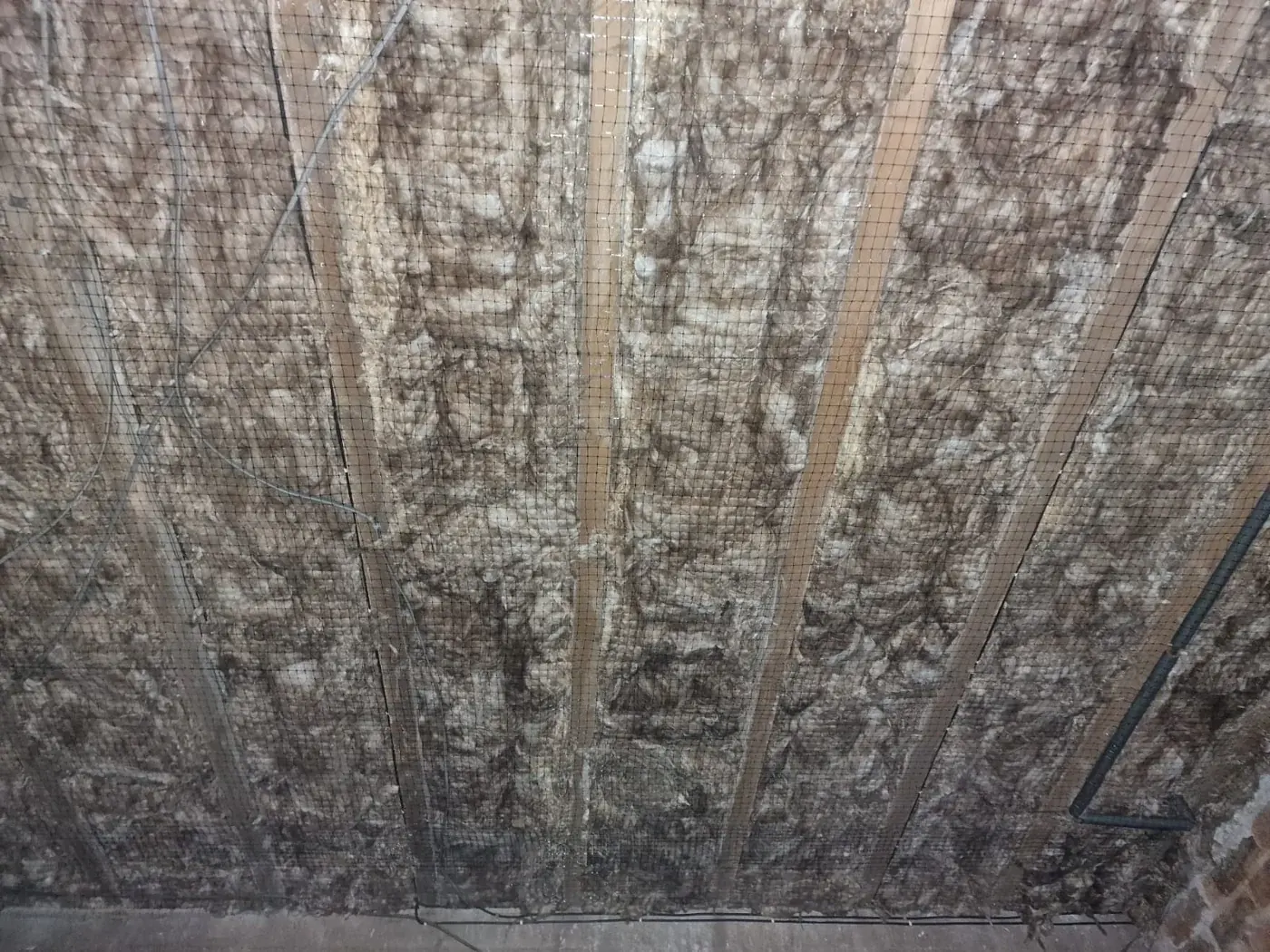
A narrow room mid-job with the wool laid between the joists.
Do you need insulation under underfloor heating?
Yes, on a suspended timber floor. The void below is open to outside air. Without a layer in between, some warmth from the pipes sinks into it. A board between the joists stops most of that.
Do you lift the whole floor to insulate under underfloor heating?
The flooring comes up in each room getting the heating. We set it aside, or take it away if a new floor is going down. The insulation goes in from above, before the pipes.
How thick should insulation be under underfloor heating?
Your heating design sets it. The design says how deep the pipes sit. We fix the battens at that depth. The boards fill the space below the pipes.
Can you get a grant for insulation under underfloor heating in Scotland?
You can apply if a TrustMark registered installer fits it. Home Energy Scotland pays up to 75% of the cost, up to £1,500, back to you after the work. It does not pay for the heating, and it decides each case.
Can my heating installer fit the insulation?
They can, but the grant needs a TrustMark registered installer. Few heating fitters are registered for floor insulation. We fit that part and work with your fitter.
Which way should the foil face?
Up, towards the heating. Foil only helps where there is an air space next to it, so it faces the side where the pipes sit.
Book a free survey. Bring your heating plan, and we will show you where the boards go.
Book Your Free Survey →“The team were efficient, clean and tidy, on budget and slightly ahead of the estimated time to install our underfloor installation. … We got all the paperwork and photos needed for our energy trust claim very quickly.”
julie paterson
Underfloor insulation · Google review

A moisture reading taken from the floor timbers in the void under a floor.
Get the insulation in before the pipes go down
Our surveyor checks the floor and the joists. Then we agree the board height with your heating fitter.
We email your quote after the visit.
Or call us on 0141 465 5812


