


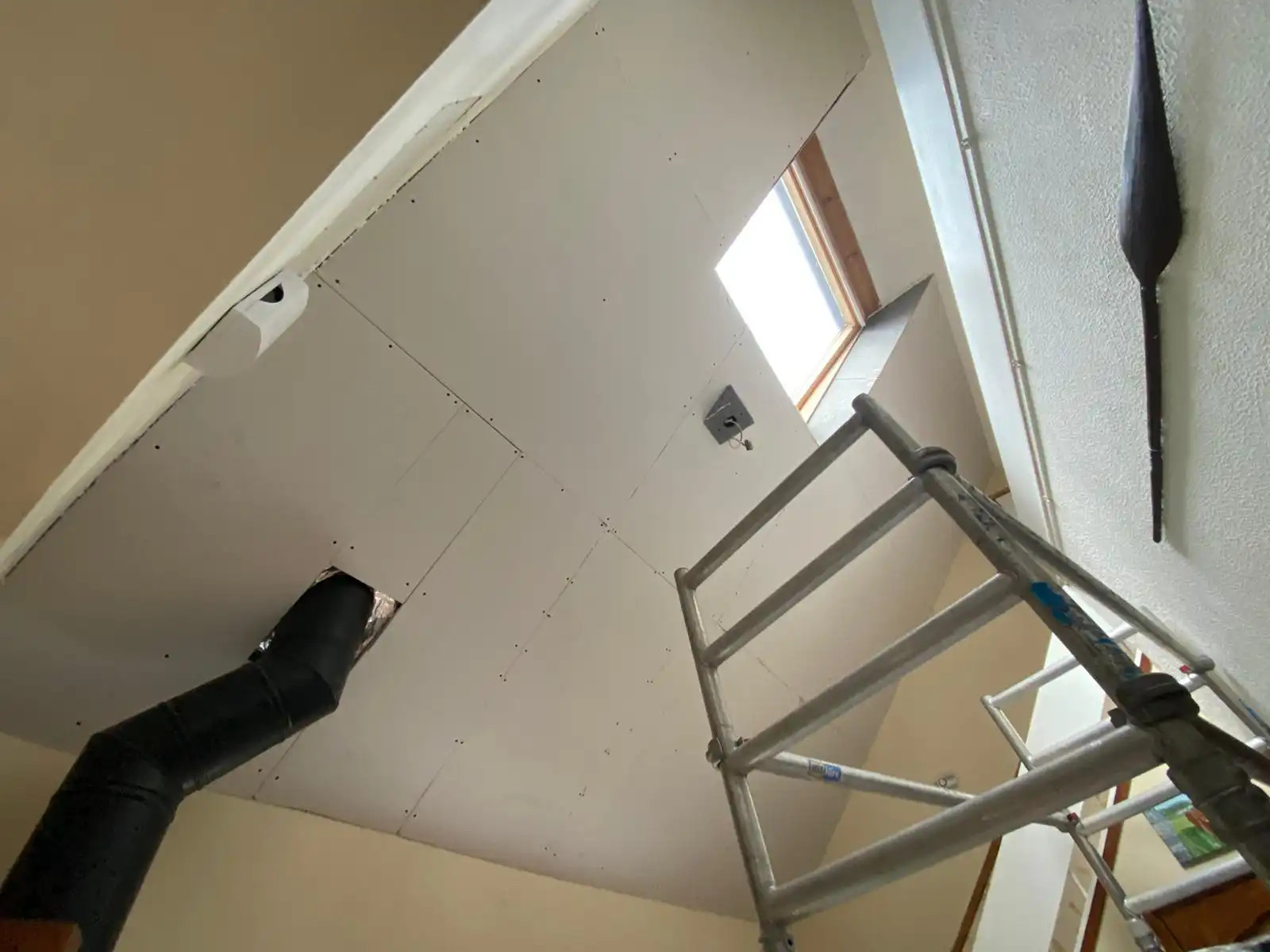
A coombed ceiling is the sloping part of an attic room ceiling. It follows the line of the roof, with the slates just behind it. There are two ways to insulate it. We can board over the ceiling you have. Or we take it down and fill the gaps between the rafters. Boarding over starts at about £5,000 for a whole attic room. Taking it down makes room for 200 to 300% more insulation in the slopes, by the reckoning of Calum Farquhar, who owns the company.
- A coombed ceiling is the slope of an attic room ceiling. Only plaster, timber and slates stand between the room and the weather.
- Boarding over keeps your ceiling up. It is the cheapest and least messy way to insulate the slopes.
- With the ceiling down, we can fit 200 to 300% more insulation in the slopes. That is Calum’s own figure.
- When the ceiling comes down, we leave a 50mm air gap behind the new insulation. Air moving through it keeps the roof timbers dry.
- The main grant, from Home Energy Scotland, stops at £3,000 for a room in the roof. It comes back to you after you pay our invoice.
- We survey attic rooms across Glasgow, Lanarkshire and Edinburgh. Nobody touches a ceiling before that.

A room in the roof with sloping ceilings on both sides and a roof window.
Put the back of your hand on the slope above the bed on a frosty night. In a cold attic room, it feels like touching a window. The heat is going out through that slope, and you can stop most of it.
What a coombed ceiling is, and why your attic room is cold

A room in the roof with its sloping ceilings skimmed, ready for paint.
In an attic room, part of the ceiling slopes down with the roof. That slope is the coombed ceiling. Behind it sit the rafters, the sarking and the slates. Old slopes often have thin insulation behind the plaster, or none at all.
Our guide to what room in roof insulation covers shows why attic rooms run cold in winter and hot in summer. It also walks round the other cold spots in the room. This guide stays on the slope.
Coombed ceiling insulation: keep the ceiling or take it down

PIR board between the rafters of the slopes, with mineral wool in the low walls.
This is the big choice, and it comes down to two things. One is how warm you want the room. The other is how much mess you can live with.
Keep the ceiling. We fix insulated plasterboard over the slope you have. Or we fix battens, a layer of multifoil, more battens and new plasterboard. Less mess and a lower price.
Take it down. We strip the slope back to the rafters and fill the space between them. The room gets much more insulation, and the job costs more.
Taking the ceiling down makes the bigger difference. The full depth of the rafters can then be filled. It also lets us see what sits behind the old plaster.
Keeping the ceiling suits a smaller budget, or a room you cannot empty. It still adds insulation to the slope, the biggest cold surface in the room. Before we suggest it, we check that air can still move behind the old ceiling.
At the survey we can price both, so you can weigh the extra warmth against the extra mess. You can see photos of each method from our own jobs on our room in roof insulation page.
Book a free survey. We will look behind your slopes and tell you whether the ceiling can stay up.
Book Your Free Survey →“They were extremely patient going through the options for our room in roof and loft insulation. It was a challenging space to work in but they did an excellent job with it.”
Tristan Stewart-Robertson
Room in roof and loft insulation · Google review
What goes behind a coombed ceiling when it comes down

Hemp going into the slopes of a dormer room.
Once the old ceiling is off, you can see the rafters. We fill the space between them, and we leave a 50mm air gap at the back. Air comes in at the eaves and runs up behind the insulation. It carries damp away and keeps the roof timbers dry.
We fill the slope with foam board or with hemp. Here is our hemp build-up, from the slates in.
- The roof. Slates over sarking or felt, as they are now.
- A 50mm air gap. Left open so air can run up from the eaves.
- Hemp between the rafters. IndiTherm hemp, cut to fit tight.
- 45mm battens across the rafters. With a second 50mm layer of hemp between them. This stops heat leaking out through the timber.
- An airtight sheet. Pro Clima Intello Plus, taped at every join and round the edges.
- Plasterboard and skim. Ready for you to paint.
The foam board route works the same way at the back. PIR board goes between the rafters, with the same 50mm gap behind it. Foil tape seals the joins. A sheet of Superfoil SF19+ goes over the top to seal the room, then battens, plasterboard and a skim.
If the whole conversion is cold, see our guide to loft conversion insulation.
Roof windows, downlights and headroom
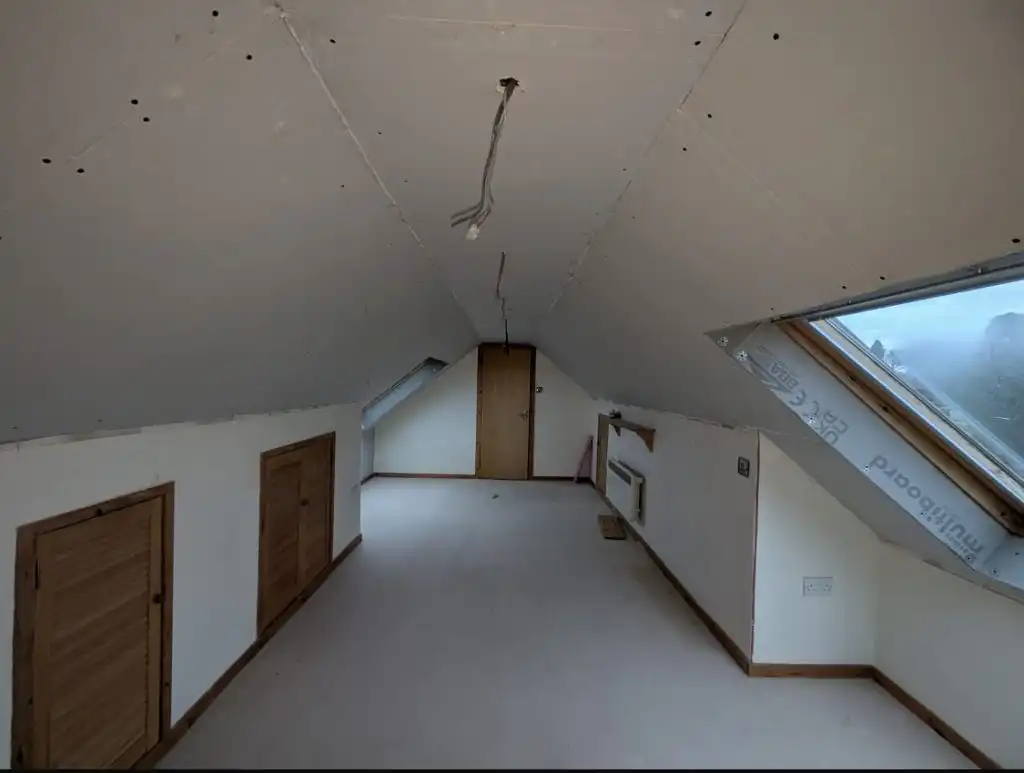
Plasterboard on the slopes of an attic room, ready for the skim.
The slope is rarely a plain sheet. It has windows, lights and corners. Each one needs thought.
Roof windows.
The sides of a roof window leave little space. Where a second layer of hemp will not fit, we use a 20mm Marmox insulation board. On a hemp job, the airtight sheet is taped to the window frame.
Downlights.
Each one is a hole in the ceiling. Warm, damp air can rise through it into the roof. Tell us about them at the survey.
Headroom.
Boarding over brings the slope into the room by the thickness of the board. On a hemp job, the battens and second layer bring it in a little more.
Dormers have their own challenges, with cheeks, a small roof and tight window sides. Our guide to dormer insulation covers them.
Book a free survey. Show us the roof windows and the lights, and we will plan round each one.
Book Your Free Survey →“Calum done the initial quotation. I found him to be informative/Knowledgeable not pushy. … Plasterer Dean and apprentice had a hard job due to years old plaster but dealt with it and left my house clean and tidy”
Allison Campbell
Room in the loft insulation · Google review
What insulating a coombed ceiling costs after the grant

Plasterboard fixed across the slopes with the joints taped.
For a whole attic room, our prices run from £5,000 to £18,000. Boarding over sits at the low end, and hemp at the top.
The main grant comes from Home Energy Scotland. For a room in the roof, it pays up to 75% of the cost. It stops at £3,000. You pay our invoice in full, and then the grant comes back to you. On a £10,000 job, your share is £7,000.
The grant is for people who own the home they live in. Your installer must be TrustMark registered. You apply with an EPC that backs the work, and nothing starts until the written offer comes. After the work, you need a new EPC before the grant is paid. Home Energy Scotland decides each case, and it also offers an optional loan, up to a limit set for each job. Home Energy Scotland gives free, impartial advice on grants, loans and funding: homeenergyscotland.org or 0808 808 2282.
Work out your grant
Tick the jobs you want. Your share updates as you go.
Our guide to room in roof insulation cost and grants sets out the price of each method and the full sums.
Coombed ceilings: common questions
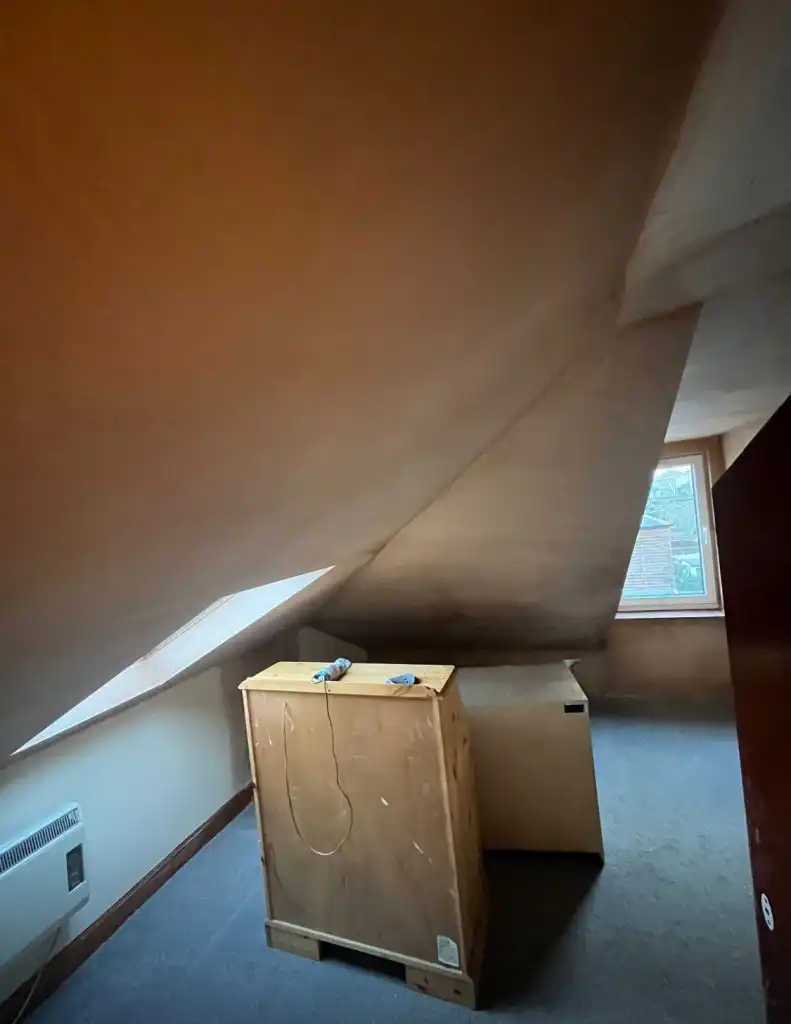
A finished room in the roof.
What is a coombed ceiling?
The sloping part of an attic room ceiling. It runs from the top of the short side wall up to the flat ceiling. It sits right under the roof, so it loses heat fast.
Can you insulate a coombed ceiling without taking it down?
Yes, by boarding over it. We can fix insulated plasterboard over it, or battens, multifoil and new plasterboard. First we check that air can still move behind the old ceiling.
How do you insulate a coombed ceiling?
Either over the old ceiling, or between the rafters once it comes down. Between the rafters, we fit foam board or hemp. We leave a 50mm air gap behind it and seal the room side.
Does insulating a coombed ceiling make the room smaller?
A little. Boarding over brings the slope in by the thickness of the board. A hemp job adds battens and a second layer, so the slope comes in a bit more.
Will insulating a coombed ceiling cause condensation?
The risk is far lower when it is done right. We seal the room side, so far less damp air gets into the roof. When the ceiling comes down, the 50mm air gap at the back lets the roof dry out.
Is there a grant for coombed ceiling insulation in Scotland?
Yes, as part of room in roof insulation, if you qualify. Home Energy Scotland pays up to 75% of the cost, up to £3,000. It pays the grant back to you after the work. Your installer must be TrustMark registered.
Book a free survey, and get a written quote with each option for your attic room side by side.
Book Your Free Survey →“The team came and installed insulation in our attic. Job done on time to a very high standard.”
Beth Murphy
Attic insulation · Google review
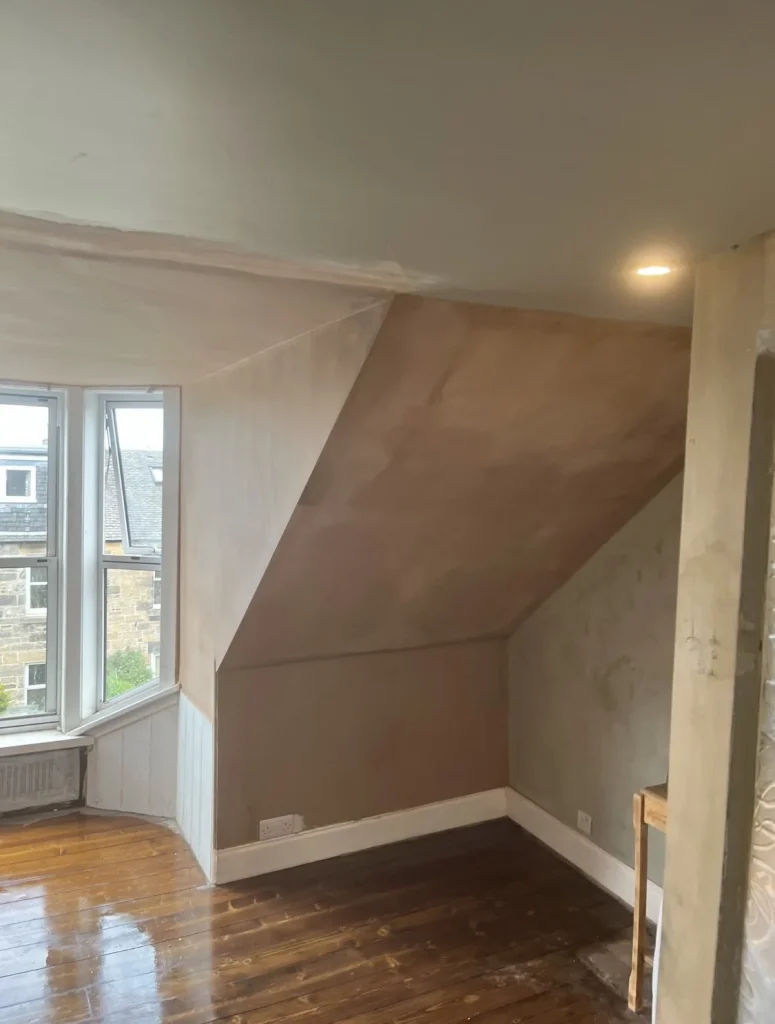
Plaster skim on the slope beside a bay window, ready to paint.
Find out what sits behind your coombed ceiling
We look into the eaves and the loft space above, measure the rafters and check the air path. Then we tell you which options your room can take.
We email your quote after the visit.
Or call us on 0141 465 5812


