


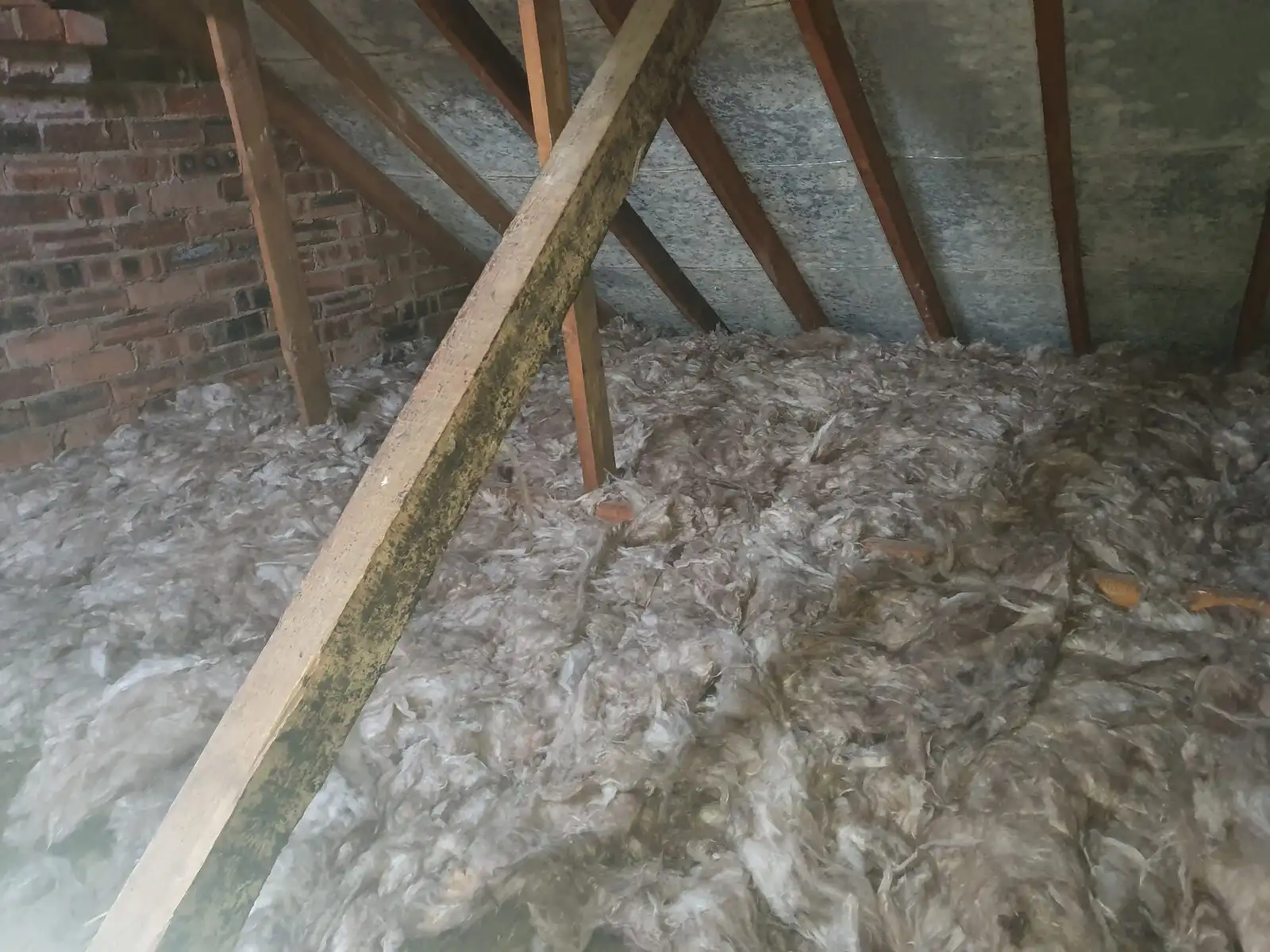
Loft insulation thickness should be at least 270mm, the level Changeworks recommends. We lay 300mm. That is two layers of Knauf Earthwool: one between the joists and one across them. A loft with one layer, level with the joist tops, leaves the timbers bare. Heat slips out past them.
- Aim for at least 270mm. We lay 300mm in two layers.
- If you can see the tops of your joists, your loft has less than that.
- The second layer goes across the joists, so the timbers are covered too.
- Boards laid flat on the wool squash it. We raise them 145mm to 300mm above the joists.
- Scotland’s building standards set a heat-loss figure for roofs, called a U-value.
- A typical loft takes us one day, from Glasgow out across central Scotland.
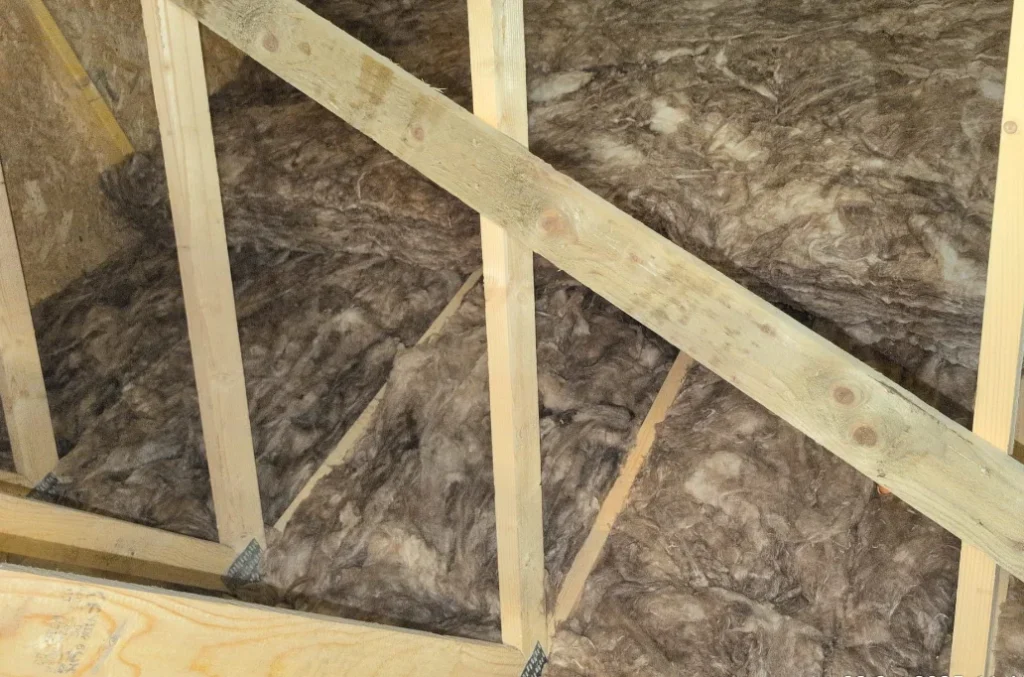
Wool laid deep across a loft, over the tops of the joists.
A ruler and a torch will tell you where you stand.
Loft insulation thickness: 270mm is the guide, and we fit 300mm
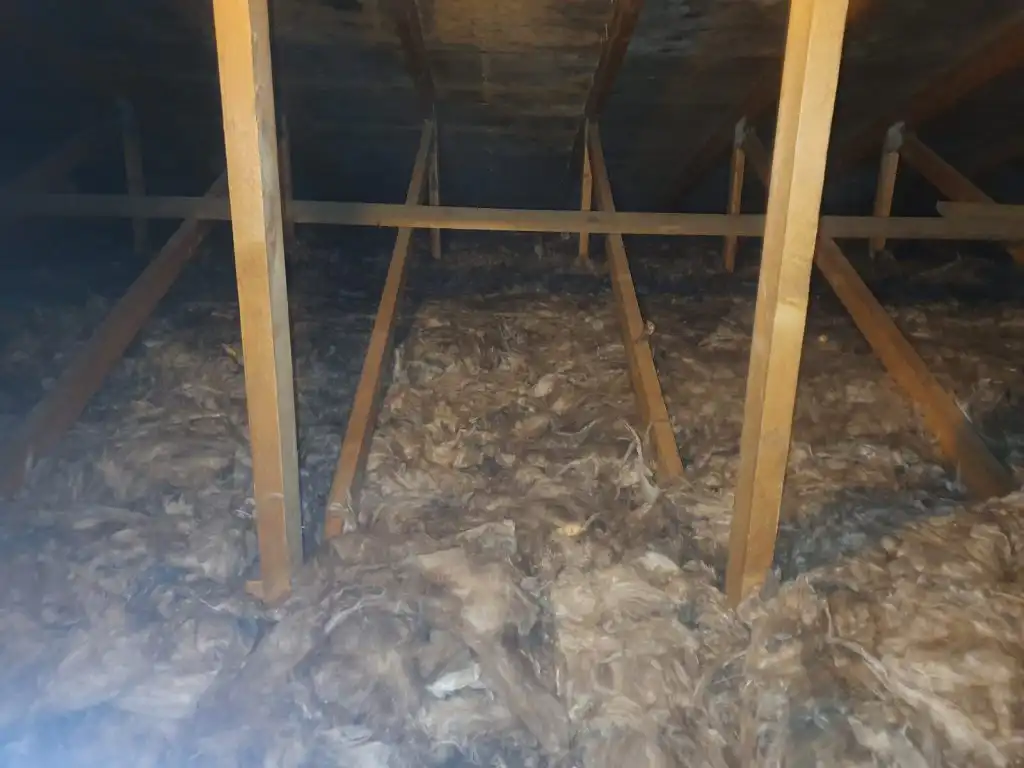
A loft with deep wool laid across the joists.
Changeworks is a Scottish energy charity. It puts the recommended level of loft insulation at 270mm.
We go a little further. Our standard loft is 300mm of Knauf Earthwool 44, laid in two layers. The extra depth costs little, because a loft has room to spare. If you want more, we can go deeper on the same visit.
Some people prefer a natural material. For them, we lay IndiTherm hemp to about 280mm. IndiTherm hemp is made in Scotland and costs more than Earthwool.
How much loft insulation do I need? Check your own loft
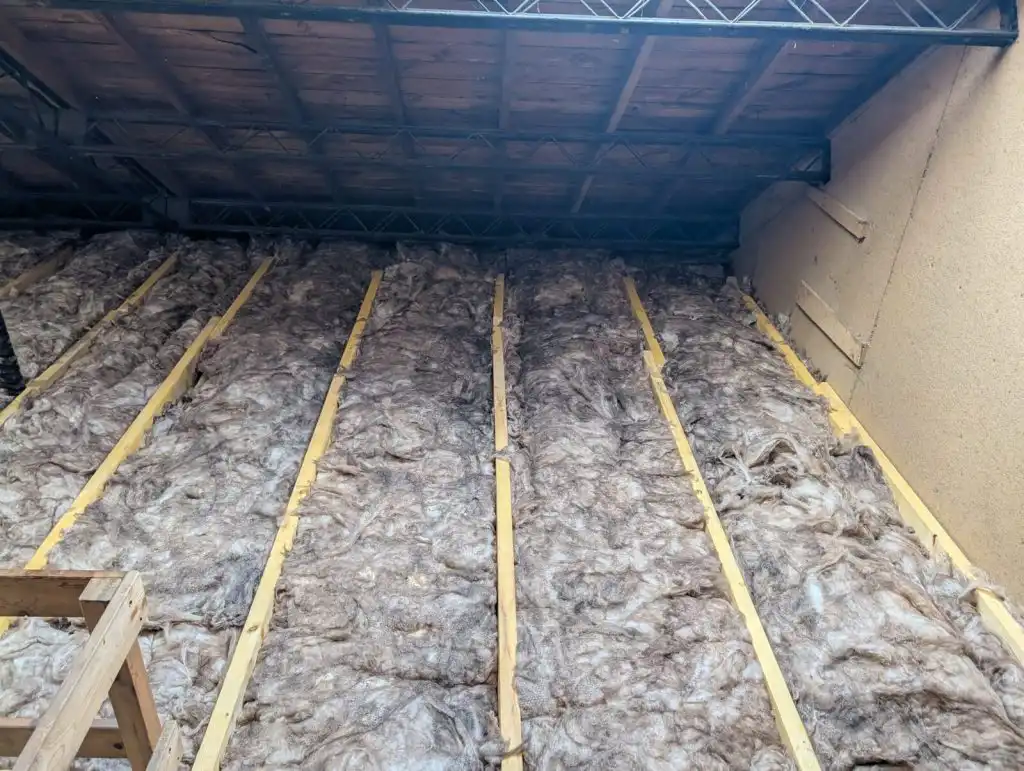
One layer, level with the joists. The joist tops are still bare.
You need enough to bury the joists and then some. You can check yours with a ruler.
Stand on the joists or boards.
Never step between the joists. The ceiling below will not hold you.
Look across the loft.
If you can see the tops of the joists, there is less insulation than the joists are deep.
Measure in three places.
Push a ruler down through the wool until it stops on the ceiling. Stay away from the hatch.
Look under boxes and boards.
Wool that has been squashed flat keeps less heat in.
Check the hatch.
A hatch with no insulation on top of it lets heat straight out.
If you measure under 270mm, a top-up will help. If the old wool is damp, dirty or patchy, we may take it out first. Our surveyor checks this at the visit.
Book a free survey. Our surveyor will measure what is in your loft and tell you what it needs.
Book Your Free Survey →“Very professional and friendly, quote & work (loft hatch) done in no time by Calum, also answered all my (novice) questions. Highly recommend +++”
Veronique Lengelle
Loft hatch · Google review
Recommended loft insulation thickness and Scotland’s building standards
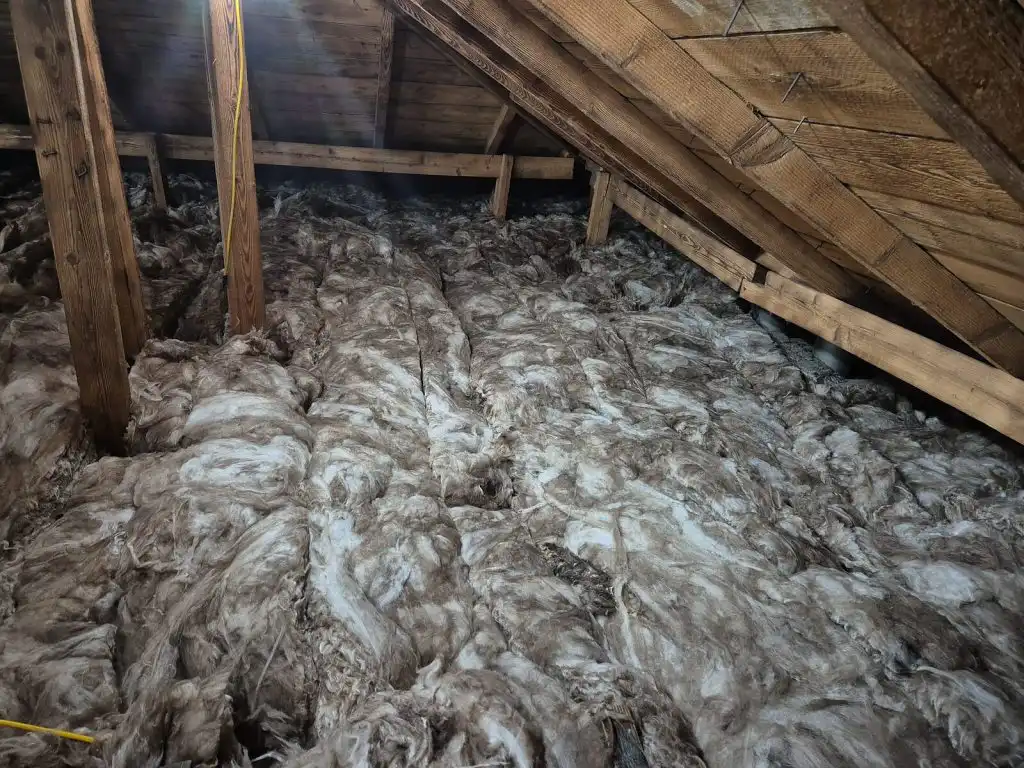
Deep wool across a loft floor.
Scotland’s building standards set a U-value for roofs. A U-value says how fast heat passes through part of a house. The lower the number, the less heat you lose.
the highest U-value Scotland allows for the roof of a new home or extension
the loft depth Changeworks recommends
Source: Scottish Government, Building Standards Technical Handbook: Domestic, April 2026 edition, clause 6.2.1, Table 6.2 (read 13 Nov 2026). Changeworks, loft insulation advice page (read 13 Nov 2026).
Two materials can hit the same U-value at different depths. So the standards leave the depth to the design. In a loft, there is room for depth, so wool laid deep is the simple way to get the number down.
How we lay 300mm in two layers
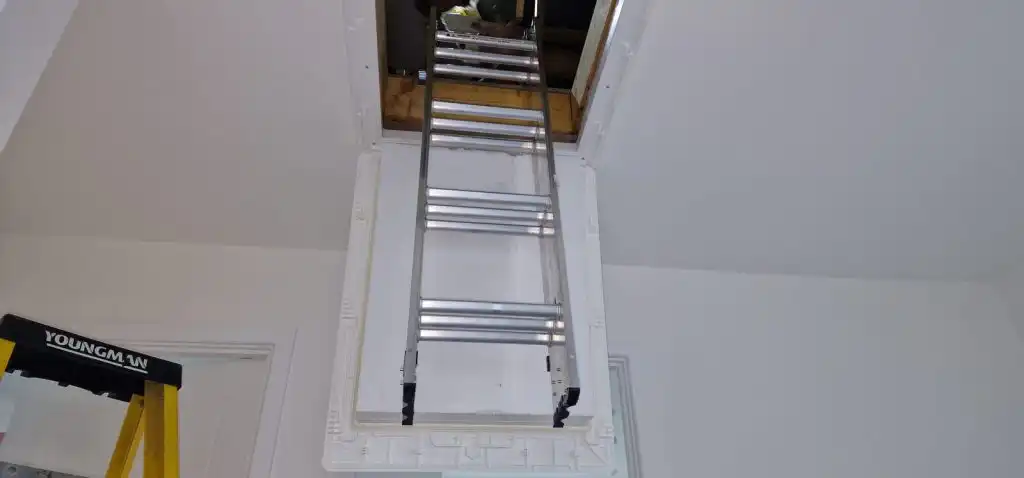
The loft hatch, one of the parts we insulate.
The depth only works if every part of the loft gets it. Here is what goes in.
First layer, between the joists.
Earthwool up to the top of the joists, usually about 150mm.
Second layer, across the joists.
It takes the total to 300mm and covers the joist tops, where heat slips past the first layer.
The hatch.
We insulate it and fit a draught seal. It is often the weakest spot in the loft.
The tank and pipes.
A deeper layer keeps more heat downstairs, so the loft gets colder. We wrap the water tank and pipes.
The eaves.
We keep the vents at the eaves clear, so air can still move through the roof. If there are none, we can fit vents in the soffits.
That is the job on our loft insulation page, and a typical loft takes one day.
A standard loft costs £1,000 to £2,000, and our loft insulation cost guide breaks that price down. There is no deposit, and our invoice is due within 7 days of completion.
You pay our invoice. Home Energy Scotland pays the grant to you once it approves your claim. The loft insulation grant in Scotland pays up to 75%, capped at £1,500.
Keeping your loft boards and storage
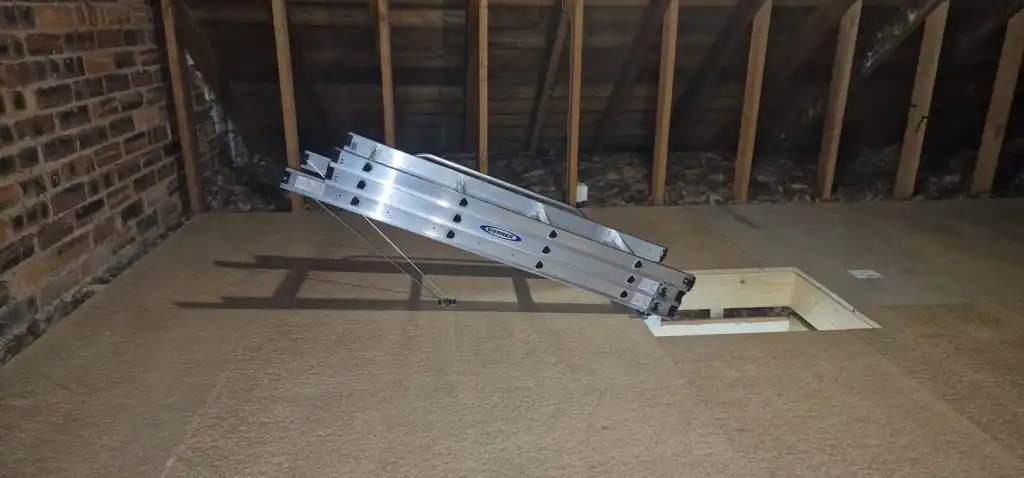
A boarded loft, with the hatch and ladder in place.
If your loft is boarded, you will want to keep that storage. Boards sit on the joists, and 300mm of wool stands much higher than that.
Boards laid straight on top. The wool gets squashed flat under them. Squashed wool keeps less heat in. So you pay for 300mm and get the warmth of a thinner layer.
Boards raised above the wool. We lift your boards and raise the floor 145mm to 300mm above the joists. We use extra timbers or Loft Legs, which are supports fixed to the joists. Then we put your boards back, or fit new ones.
Tell us at the survey how you use the loft. If your floors need doing too, two crews can do loft and underfloor insulation in one day.
Book a free survey, and keep your loft storage when we add the depth.
Book Your Free Survey →“Very professional, good tidy workmen had the loft insulation inc flooring lifted-re laid, cavity wall insulation and Nest heating upgrade. All arranged through Callum. No issues recommending this company.”
Kenny Berrie
Loft insulation and flooring · Google review
Loft insulation thickness: common questions
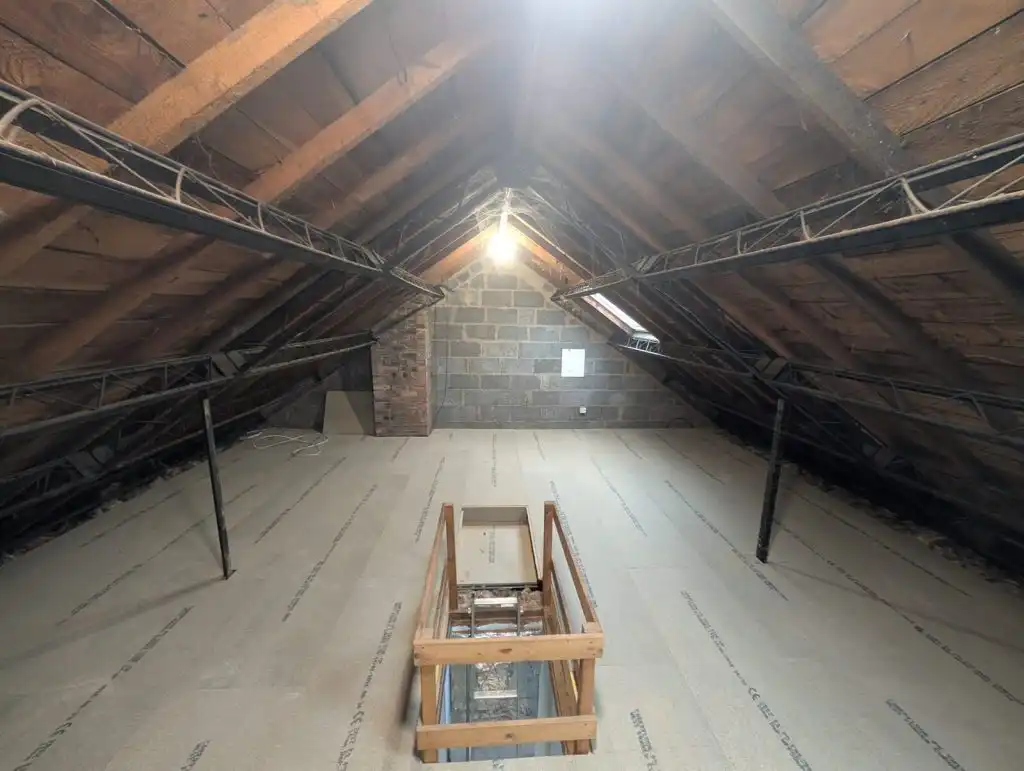
A boarded loft with a raised frame around the hatch.
How thick should loft insulation be?
At least 270mm. We lay 300mm of Knauf Earthwool in two layers. The second layer covers the tops of the joists.
Is 200mm of loft insulation enough?
It is short of the 270mm guide. A top-up to 300mm adds a second layer across the joists. Our surveyor checks if the old wool can stay.
Can you have too much loft insulation?
Only if it blocks the air at the eaves. Your roof needs air moving through it. We keep the eaves clear, so going deeper does no harm there.
Can I put boards straight on top of loft insulation?
No, it squashes the wool flat. We raise the boards 145mm to 300mm above the joists, so the insulation keeps its full depth.
Do I need to take the old insulation out?
Not always. We take it out when it is old, damaged, the wrong type, or leaves no room for the new layers. If it is in fair shape, we top it up. Our loft insulation removal page covers the clear-out.
How much does it cost to top up loft insulation?
Our surveyor prices it after measuring what is up there. An approved grant pays up to 75%, capped at £1,500.
Book a free survey. Our surveyor will check the depth, the hatch and the eaves in one visit.
Book Your Free Survey →“Team who installed insulation, carried out great job , tidied up as they proceeded, and did final cleanup and showed us insulated loft when completed”
Thomas McGregor
Loft insulation · Google review
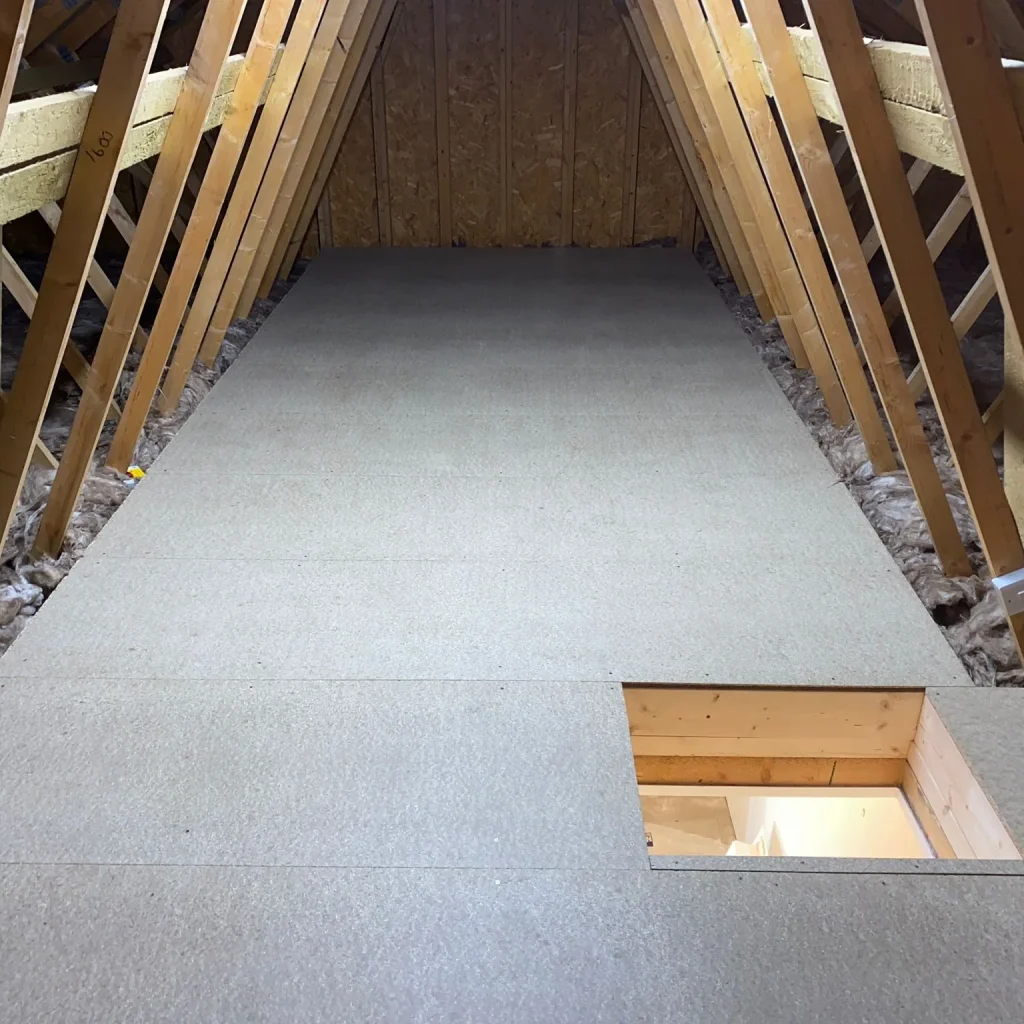
A finished loft, boarded for storage.
Find out how deep your loft is
Our surveyor measures the wool you have, checks the hatch and the eaves, and asks how you use the loft. Then you get one written price.
Or call us on 0141 465 5812


